 EN

A Permanent Magnet Motor PMSM can be an efficient, precise choice for industrial equipment, but it is not indifferent to its duty cycle. A conveyor that indexes every few seconds, a pump that repeatedly responds to level control, or a high-inertia fan that is started and stopped on process demand can impose far more stress than its nameplate rating suggests. The important question is not simply whether the motor can start. It is whether the motor, inverter, load, cooling system, and control logic can repeat that start-stop pattern without accumulating heat, torque shock, or electrical stress.
As an engineer assessing permanent-magnet motor configurations, I would begin with the real load profile: starts per hour, acceleration time, reflected inertia, stop method, ambient temperature, and rest time. That is more useful than treating a Permanent Magnet Motor PMSM as a component with a fixed power rating. A PM Synchronous Motor may operate smoothly in continuous duty yet require a different design review in cyclic industrial service.
Why Start-Stop Duty Is More Demanding Than It Looks
Each start asks the drive to build current and torque quickly enough to overcome static friction, process load, and rotating inertia. Each stop asks the system to remove kinetic energy, either by letting the load coast, controlling deceleration, or handling regenerative energy. When this sequence repeats before the machine sheds the previous cycle's heat, the duty cycle becomes the governing condition.
The short answer is not that every frequent start will damage a PMSM. More precisely, repeated starts become harmful when the thermal, torque, and voltage margins are too small for the actual cycle. A Permanent Magnet Motor PMSM therefore needs to be evaluated together with its variable-frequency drive, protection settings, gearbox or coupling, and driven equipment.
1. Higher Current Peaks and More Heat in the Motor and Drive
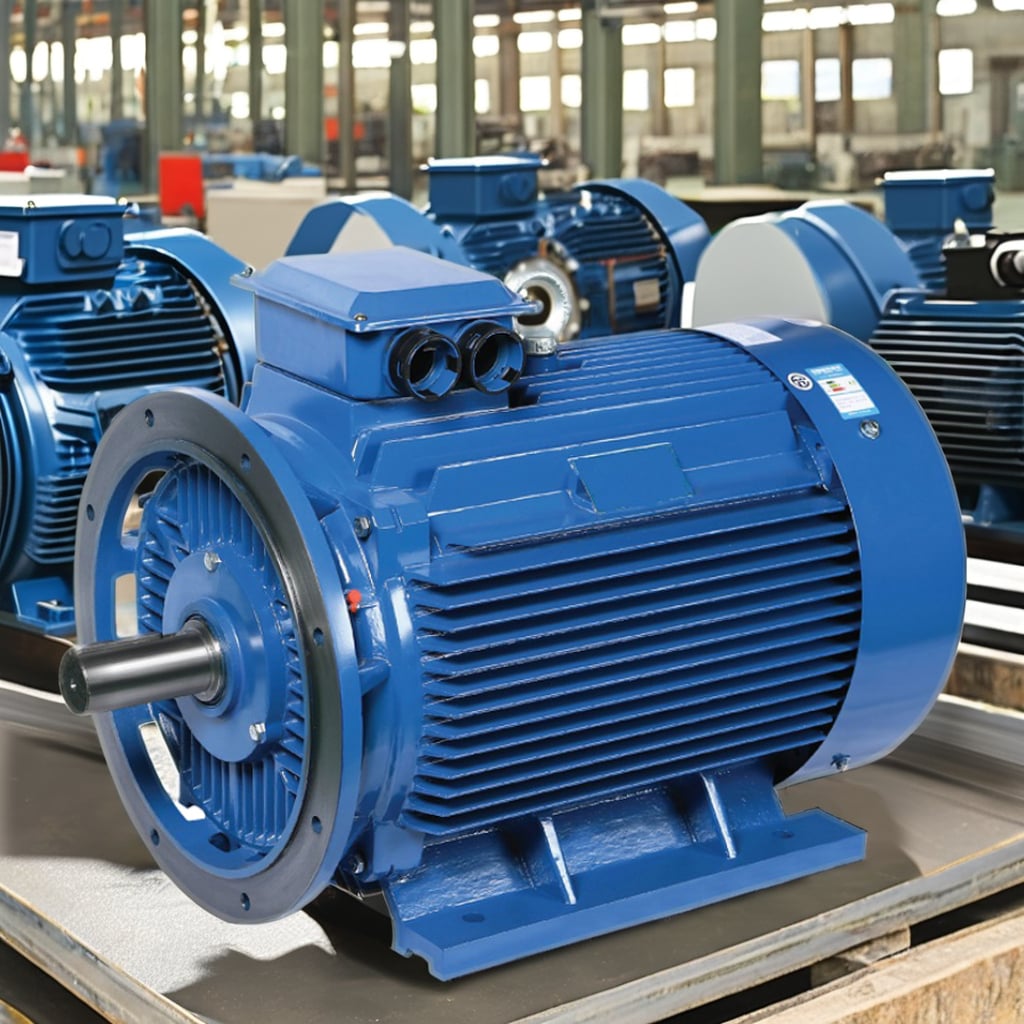
Acceleration requires torque, and torque requires current. Even with a properly controlled inverter, repeated acceleration increases copper loss in the stator windings and switching and conduction losses in the drive. If starts are close together, winding, inverter, and cabinet temperatures can ratchet upward because there is not enough low-load time for cooling.
This matters because insulation life and electronic reliability are temperature-sensitive. A thermal model should consider the complete cycle rather than only the running current after the machine reaches speed. Industrial motor-protection guidance also treats the permitted number of starts and cooling time as duty-specific decisions, not universal numbers. If ventilation is tied to shaft speed, cooling can be weakest precisely during repeated low-speed acceleration and deceleration.
For a Permanent Magnet Motor PMSM, confirm the drive's current limit, the motor's short-time thermal capability, the enclosure cooling arrangement, and the ambient temperature around the motor and inverter. If the site runs hotter than the assumed condition, the available thermal margin can be lower than a simple nameplate comparison implies.
2. Thermal Cycling Can Age Insulation and Connections
Frequent start-stop operation does not only raise average temperature; it repeatedly expands and contracts materials. Stator insulation, winding end turns, terminals, solder joints, cable lugs, and drive components experience thermal cycling. Over time, weak connections may loosen or develop higher resistance, which then creates additional localized heating.
The practical consequence is often a maintenance problem before it is an obvious motor failure: intermittent overtemperature alarms, unexplained current imbalance, discolored terminals, or nuisance trips after a process change. A PM Synchronous Motor used in a high-cycle application benefits from periodic checks of connection torque, insulation condition, cooling paths, and temperature-trend data rather than relying only on fault alarms.
3. Torque Transients Can Stress the Shaft Train and Process Equipment
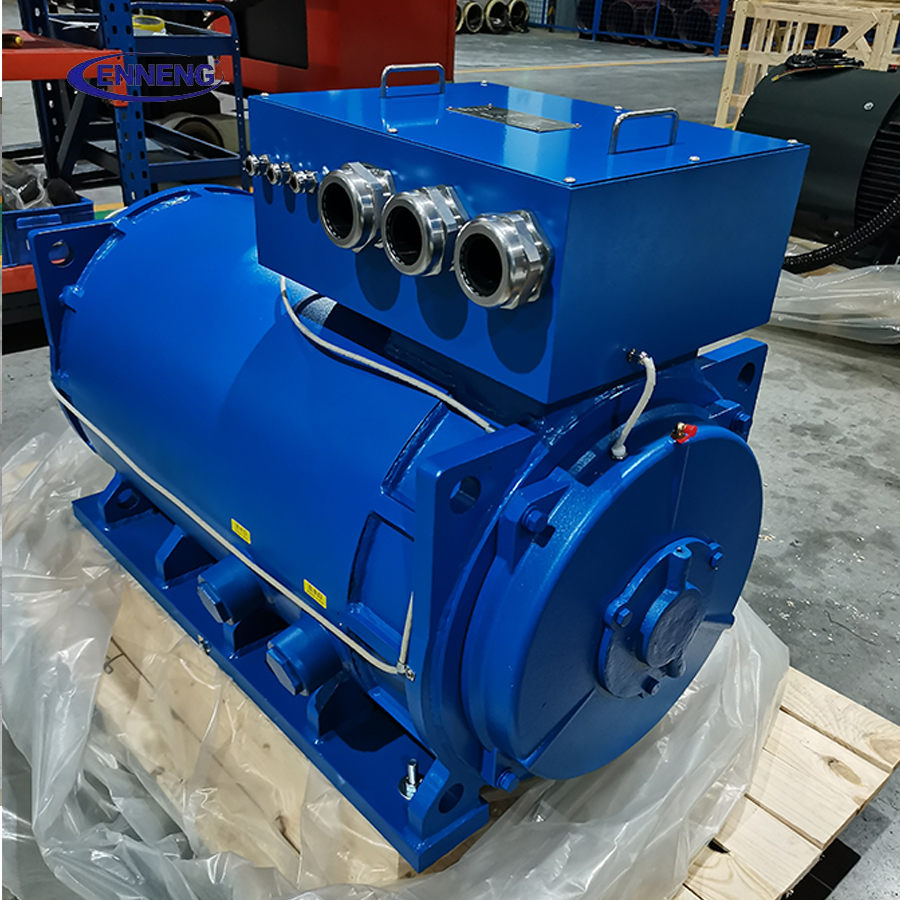
High starting torque is useful, but abrupt torque can be damaging. Repeated acceleration and braking can shock couplings, keys, gearboxes, belts, chains, pump shafts, and the driven process. Backlash, torsional resonance, and a load that sticks before breaking free can make the mechanical effect larger than the electrical trend alone suggests.
This is where evaluating a Permanent Magnet Motor PMSM in isolation can be misleading. The motor may be sized correctly, while the coupling or process equipment is not prepared for the torque ramp. A controlled S-curve acceleration and deceleration profile can reduce shock, but it must still meet throughput requirements. Operators should also distinguish a controlled stop from an emergency stop; the latter may create a very different mechanical event.
4. Magnet and Rotor Risks Increase When Heat and Demagnetizing Fields Combine
Permanent magnets do not normally lose performance merely because a motor starts often. The concern arises when elevated rotor temperature and adverse magnetic conditions reduce the design margin. Research on permanent-magnet machine startup has identified irreversible demagnetization as a possible condition-dependent risk in some designs. That is a reason to validate margin with the manufacturer and drive supplier, not a reason to assume every PMSM will demagnetize.
What changes after partial magnet weakening is important: torque capability can fall, current demand can rise for the same load, and heating may worsen. For demanding cycles, ask how the Permanent Magnet Motor PMSM has been evaluated for overload, field-weakening operation, stalled or near-stalled conditions, and high ambient temperature. The answer should be specific to the motor and application rather than a generic promise.
5. DC-Bus Overvoltage and Inverter Stress During Deceleration
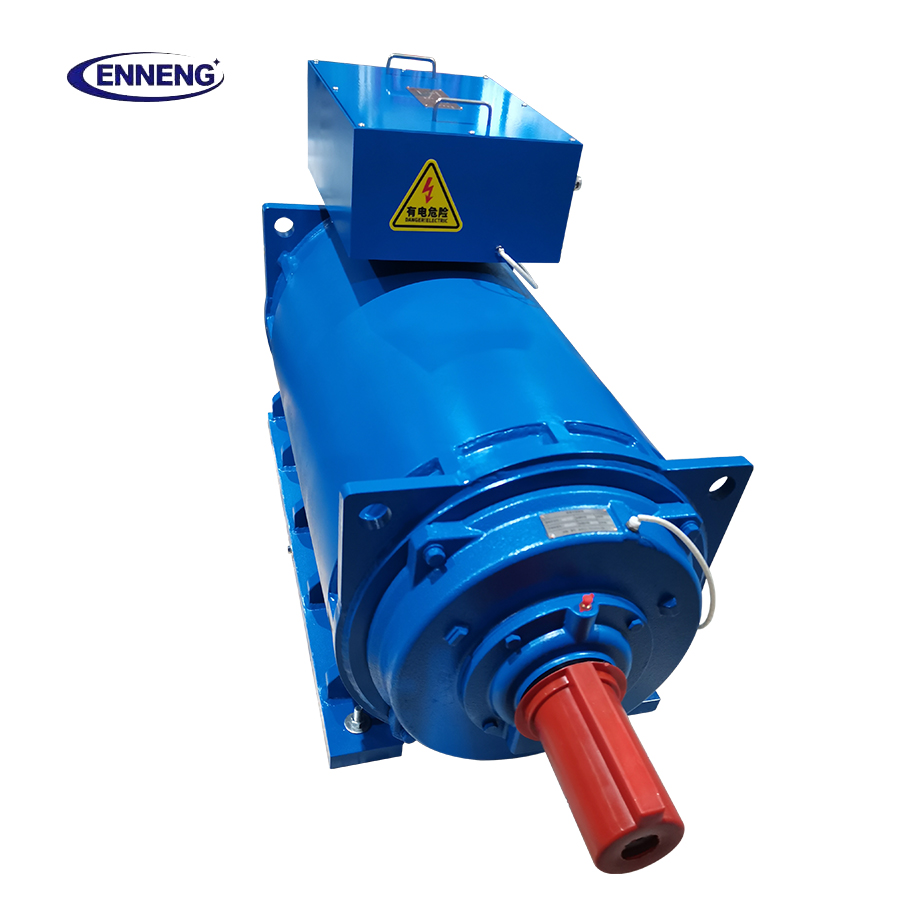
Stopping a rotating load does not make its stored energy disappear. With a high-inertia load, controlled deceleration can return energy to the DC bus. If the drive cannot absorb, reuse, or dissipate that energy, it may trip on overvoltage. Frequent trips interrupt production and can tempt operators to lengthen ramp times without checking whether that change solves the process requirement.
Review the stopping mode early: coast, controlled ramp, regenerative unit, or braking resistor. The appropriate choice depends on inertia, cycle frequency, deceleration time, and the system's ability to manage returned energy. A Permanent Magnet Motor PMSM can be well matched to the load while the inverter's braking arrangement is still underspecified.
6. More Trips, Less Availability, and Harder Root-Cause Analysis
When thermal, mechanical, and DC-bus effects overlap, symptoms can look unrelated. One machine may show overload trips after several cycles; another may show a temperature alarm only in summer; a third may produce coupling wear without a drive fault. This makes availability loss expensive to diagnose because the failure often depends on the sequence of events rather than a single steady-state measurement.
Instead of increasing protection thresholds, record starts per hour, start duration, current peak, winding or frame temperature, DC-bus events, and trip codes. Compare these values between normal and difficult production shifts. In practice, the pattern becomes clearer when the operating data is viewed as a cycle, not as isolated snapshots.
The ENNENG Customisation Advantage
No two industrial facilities share the same spatial or mechanical constraints. ENNENG stands out because we do not just supply off-the-shelf catalogue products; we specialise in delivering a tailor-made permanent magnet motor tailored to your specific application .
Supported by our elite R&D team consisting of engineers from the National Rare Earth Permanent Magnet Engineering Centre, and backed by dozens of patents, we customise high-voltage (6kV/10kV) and low-voltage (380V/660V/1140V) solutions to match your existing footprint. From water treatment facilities and oil wells to explosion-proof mining environments, we deliver optimal performance where general-purpose motors fail.
If you are evaluating commercial permanent magnet motors for sale and need an engineered drive solution that guarantees efficiency and longevity, ENNENG is your trusted partner.Contact ENNENG Today.Speak to our technical engineering team to receive a customised drive proposal.
- WhatsApp: +86 18562780228
- E-Mail: [email protected]
- Phone: +86 532 66000559