
 EN

When a plant’s compressed-air demand moves through the day, the drive system has to do more than simply run or stop. An Air Compressor PMSM paired with a frequency converter can continually align motor speed with the air end’s required output. The result is a control approach that aims for steadier pressure, fewer abrupt transitions, and a closer match between electrical input and real demand.
From an application-engineering viewpoint, the useful question is not whether an Air Compressor PMSM is inherently better in every installation. It is whether the motor, converter, air end, sensors, and control settings are matched to the site’s duty cycle. This article explains how that cooperation works and what to verify before commissioning.
Why variable speed matters in compressed-air operation
Many air systems do not consume the same volume of air every minute. Tool use, shifts, process changes, leakage, and downstream storage all change the load. A fixed-speed compressor typically handles those changes through loading, unloading, inlet control, or stop-start cycles. That can be practical in the right application, but it does not make motor speed follow demand continuously.
An Air Compressor PMSM drive changes the control option. The converter receives a demand signal, usually derived from measured system pressure, and commands a motor speed that can move the compressor’s delivered flow toward the current requirement. The shift that matters is from chasing a nameplate output to matching the actual duty cycle.
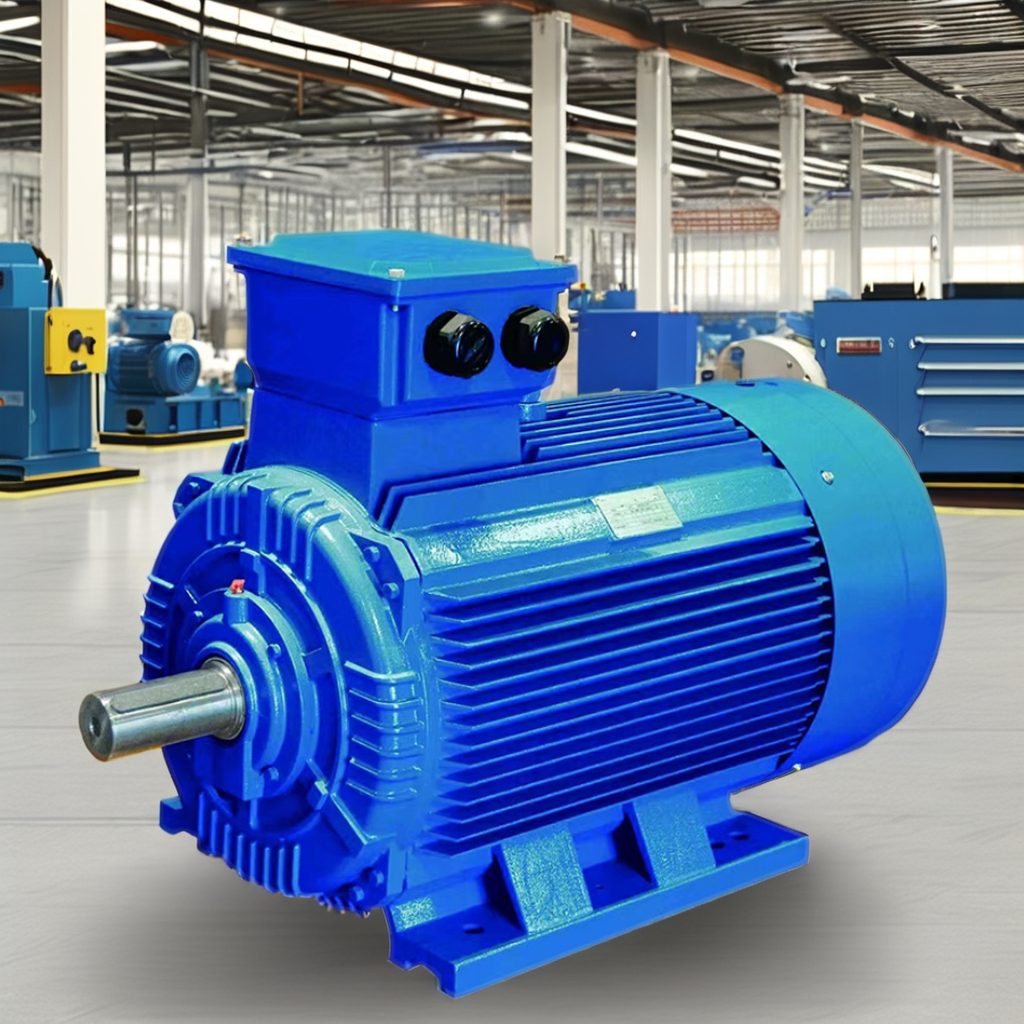
The respective jobs of the PMSM and frequency converter
The motor provides controlled torque
A Permanent Magnet Motor PMSM uses permanent magnets on its rotor rather than rotor current for excitation. In an Air Compressor PMSM application, the motor must produce enough torque across the intended speed range while remaining within its thermal, voltage, and current limits. Its characteristics can support efficient part-load operation, but the actual outcome still depends on the air end, cooling arrangement, load profile, and drive configuration.
Rotor position information is central to PMSM control. Depending on the design, the controller obtains position from a sensor or estimates it. That information lets the drive place stator current appropriately relative to the rotor magnetic field, so torque can be regulated rather than left to a simple line-frequency operating point.
The converter turns demand into electrical commands
The frequency converter rectifies the incoming supply to a DC link and synthesizes variable-frequency, variable-voltage output for the motor. With vector control, it separates current components associated with magnetic flux and torque. For an Air Compressor PMSM, that control lets the drive accelerate smoothly, hold a requested speed, and respond to a changing pressure signal without directly connecting every speed change to the supply frequency.
It is more precise to say the converter manages the motor’s electromagnetic torque and speed while the compressor control system decides what speed is needed. The converter is not a standalone cure for poor piping, excessive leakage, an undersized receiver, or an incorrectly selected air end.
How the pressure-control loop creates stable adjustment
A typical Air Compressor PMSM system uses a pressure transducer in the relevant part of the network. The controller compares measured pressure with a setpoint or permitted pressure band. When demand rises and pressure begins to fall, the controller increases the speed request. When demand falls and pressure rises, it reduces the request. The frequency converter then follows that request within configured speed, current, and ramp limits.
- Measure: The controller samples system pressure and may also monitor temperature, current, and protective inputs.
- Decide: A PID or related control routine calculates how much speed correction is required.
- Command: The speed reference is sent to the converter.
- Regulate: The converter controls the Air Compressor PMSM torque and speed.
- Verify: The pressure response is observed and the loop repeats.
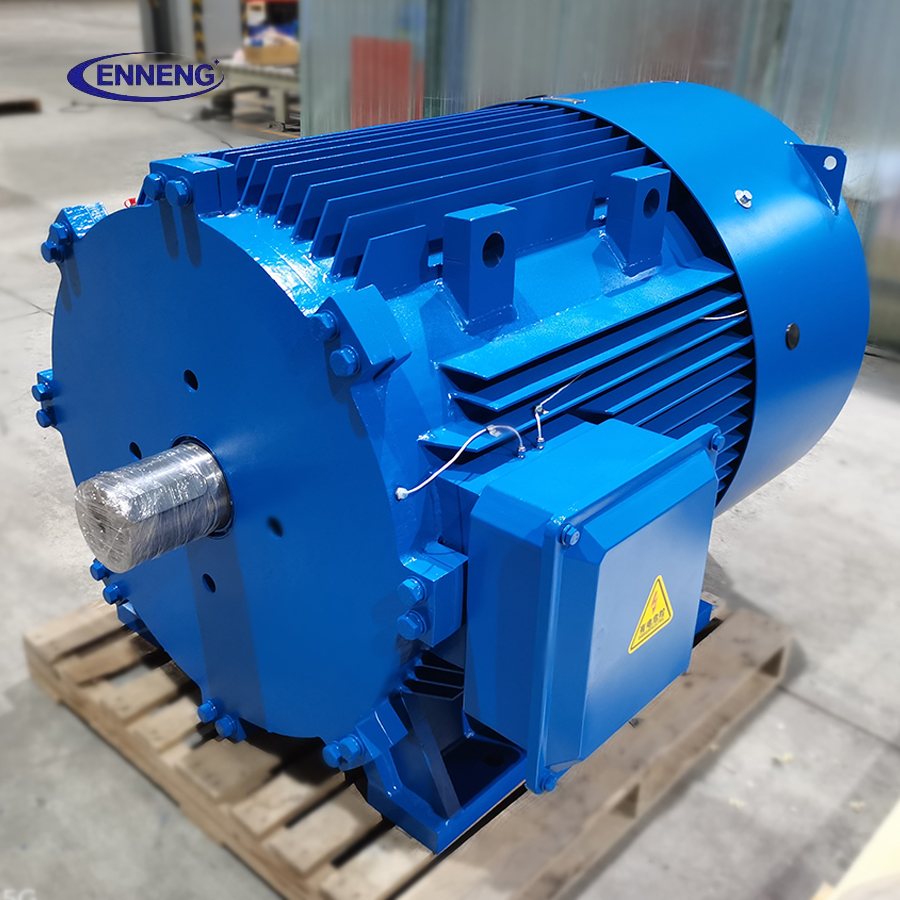
The proportional term reacts to present error, the integral term addresses persistent offset, and the derivative term can temper the response to rapid change when used appropriately. Settings that are too aggressive may create hunting: speed repeatedly overshoots and undershoots while pressure oscillates. Settings that are too slow may allow an unnecessarily broad pressure swing. Stable variable-speed adjustment therefore comes from coordinated tuning, not merely from installing an inverter.
Where compressor behavior limits the control range
Every Air Compressor PMSM package has a usable operating envelope. The minimum speed must preserve lubrication, cooling, and stable air-end operation. The maximum speed must stay within mechanical, thermal, electrical, and manufacturer-defined limits. The controller also needs sensible acceleration and deceleration ramps so it does not demand torque beyond the motor-drive system’s configured limits or create disruptive pressure changes.
In practice, a low-demand period may not mean that the compressor should run indefinitely at the lowest possible speed. If demand falls below the stable capacity range, the package may need to unload or stop according to its logic. Conversely, a sustained demand above available variable-speed capacity calls for another compressor, storage, demand reduction, or a revised control strategy—not an attempt to overdrive the motor.
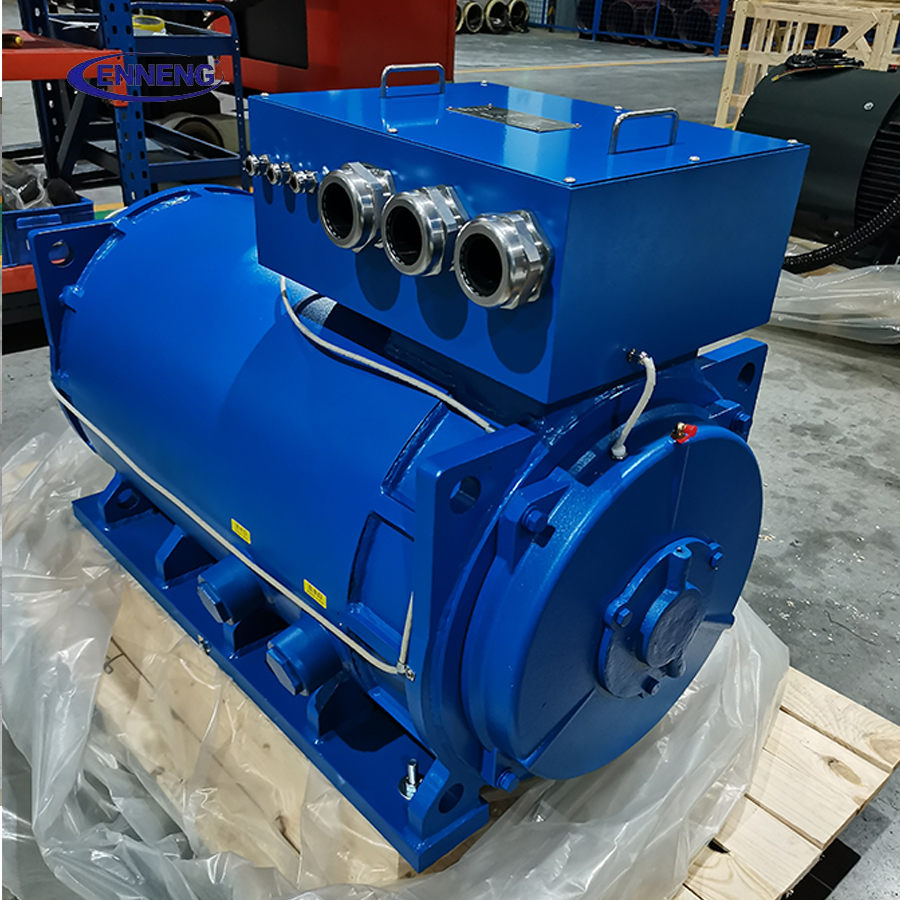
The ENNENG Customisation Advantage
No two industrial facilities share the same spatial or mechanical constraints. ENNENG stands out because we do not just supply off-the-shelf catalogue products; we specialise in delivering a tailor-made permanent magnet motor tailored to your specific application .
Supported by our elite R&D team consisting of engineers from the National Rare Earth Permanent Magnet Engineering Centre, and backed by dozens of patents, we customise high-voltage (6kV/10kV) and low-voltage (380V/660V/1140V) solutions to match your existing footprint. From water treatment facilities and oil wells to explosion-proof mining environments, we deliver optimal performance where general-purpose motors fail.
If you are evaluating commercial permanent magnet motors for sale and need an engineered drive solution that guarantees efficiency and longevity, ENNENG is your trusted partner.Contact ENNENG Today.Speak to our technical engineering team to receive a customised drive proposal.
- WhatsApp: +86 18562780228
- E-Mail: [email protected]
- Phone: +86 532 66000559