 EN

In heavy rubber tire mixing lines and mine ventilation shafts, plant engineers frequently execute a Retrofit Induction to PMSM upgrade by retaining the existing stator frame and replacing the squirrel-cage rotor with a permanent magnet assembly. However, when high ambient heat combines with heavy VFD starting transients, poorly chosen rotor magnets suffer flux loss, causing torque collapse and unscheduled production halts. A Retrofit Induction to PMSM scheme couples stator bore geometry, air-gap length, inverter limits, and cooling paths into one electromagnetic system rather than a simple magnet swap.
Relying solely on room-temperature catalog remanence numbers exposes renovated drives to thermal degradation and inverter faults. ENNENG addresses these challenges directly. As a specialized high-tech enterprise focused on the R&D, design, and manufacturing of high-efficiency Permanent Magnet Motor PMSM systems, ENNENG engineers tailored rotor solutions that eliminate standard rotor excitation losses while preserving strict coercivity margins. By partnering with ENNENG on a Retrofit Induction to PMSM project, industrial plants secure reliable torque density and lower operational overhead.
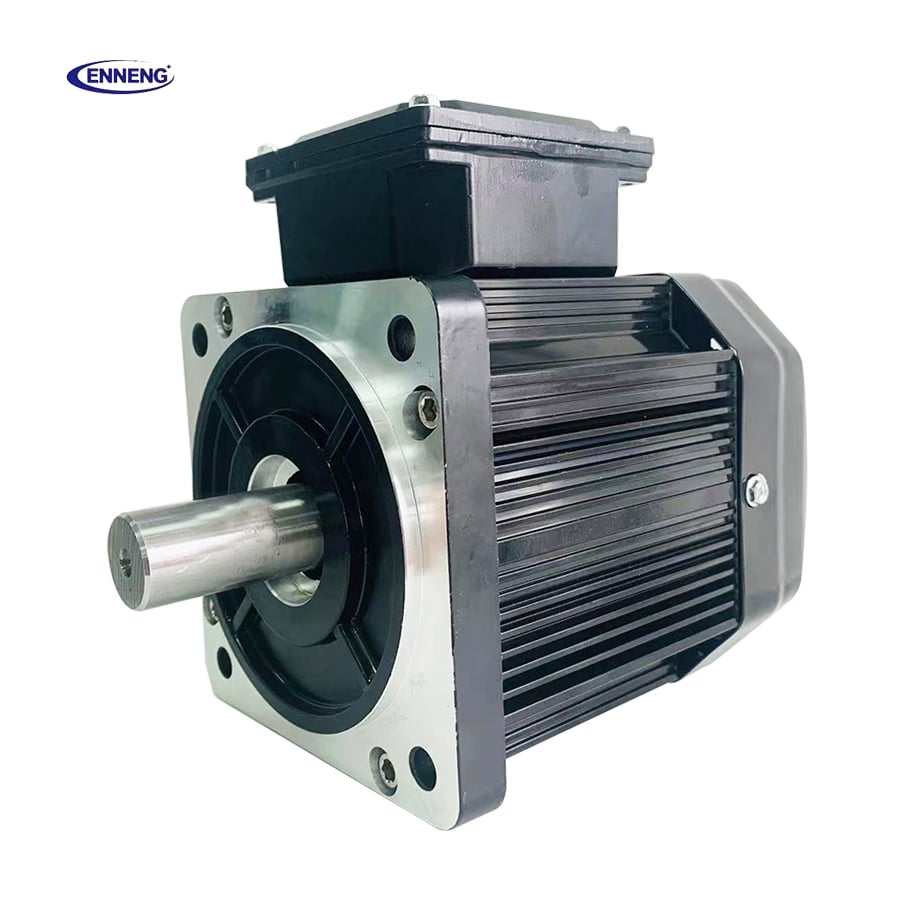
Technical Highlights: System-Level Magnet Selection in a Retrofit Induction to PMSM
Formulating a dependable Retrofit Induction to PMSM renovation scheme requires evaluating how rare-earth magnet grades behave inside the fixed mechanical and thermal boundaries of a legacy induction frame.
Error 1: Selecting by Remanence Alone Instead of Intrinsic Coercivity
ARetrofit Induction to PMSM rotor generates air-gap flux without excitation current by embedding high-performance NdFeB (Neodymium Iron Boron) magnets into the core. A common error in a Retrofit Induction to PMSM bill of materials is choosing an NdFeB grade by room-temperature remanence (Br) alone to boost flux in a constrained stator bore. Raising air-gap flux without checking saturation and back-EMF pushes the machine past its inverter voltage ceiling before reaching rated speed. Under IEC 60034-18-41 inverter-fed insulation guidelines, ENNENG permanent magnet solutions map the full high-temperature B-H curve and prioritize intrinsic coercivity (Hcj) so magnet edges survive opposing stator fields.
Error 2: Treating Catalog Magnet Temperature as Rotor Hot-Spot Temperature
In a standard asynchronous motor, induced rotor currents create substantial copper loss and heat, whereas an ENNENG rotor eliminates rotor copper losses completely. Even so, a Retrofit Induction to PMSM reuses a housing originally sized for an induction rotor, where VFD harmonic eddy currents and restricted air-gap convection can create local rotor hot spots. Because NdFeB intrinsic coercivity drops by roughly 0.6% per degree Celsius, selecting a grade simply because its catalog service temperature exceeds plant ambient violates IEC 60034-1 thermal class margins.
Core Advantages of Engineered NdFeB Grades in a Permanent Magnet Motor PMSM
Avoiding specification errors in a Retrofit Induction to PMSM unlocks clear technical advantages over legacy induction drives in efficiency, power factor, and thermal stability.
Superior Efficiency and Duty-Cycle Matching Across All Loads
An engineered Permanent Magnet Motor PMSM from ENNENG maintains ultra-premium efficiency across a wide operating window of 25% to 120% of rated load, running 2% to 5% higher than standard asynchronous motors at rated point and saving 5% to 30% of system energy in variable-load applications. Proper NdFeB magnet grade selection matches coercivity margins to the actual load histogram rather than over-specifying costly grades for moderate duty cycles.
Optimized Power Factor and Irreversible Demagnetization Protection
An ENNENG permanent magnet synchronous drive achieves a power factor of 0.95 to 1.0 compared to asynchronous motors that peak around 0.86, reducing stator operating current by more than 10%. Simultaneously, ENNENG models locked-rotor stalls, short-circuit transients, and hot restarts under NEMA MG 1 and IEEE 841 severe-duty frameworks to prevent irreversible demagnetization past the knee of the B-H curve.
Lower Temperature Rise and Compact Frame Footprint
Because rotor copper losses are zero, an ENNENG permanent magnet rotor operates at a temperature rise 20K lower (staying under 60K) than standard induction units. This thermal margin allows ENNENG to build motors one or two frame sizes smaller than asynchronous motors of identical power rating, saving critical installation space.
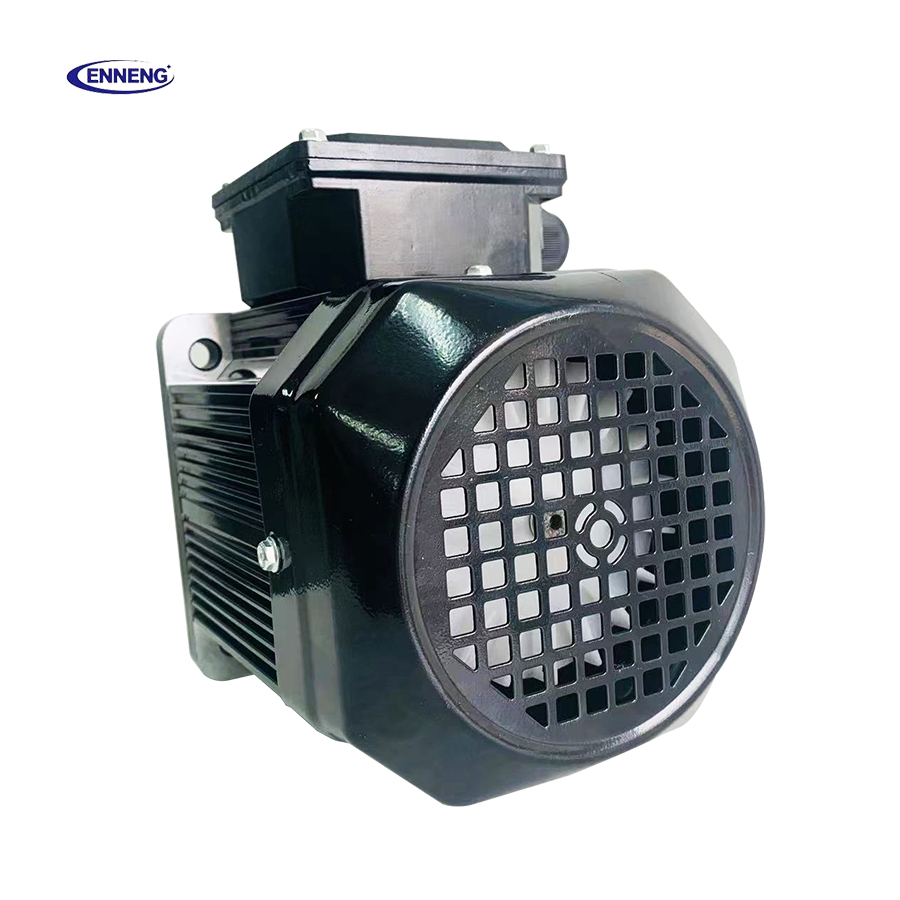
Direct Drive and Rotor Retention Architecture: Maximizing Mechanical Reliability
Magnet grade cannot be separated from rotor pole geometry, axial segmentation, and mechanical retention in a Retrofit Induction to PMSM .
Eliminating the Gearbox and Suppressing Eddy-Current Losses
By segmenting NdFeB magnets axially to block VFD harmonic eddy currents and increasing rotor pole counts, ENNENG designs low-speed, high-torque direct-drive Retrofit Induction to PMSM systems that couple directly to the driven load, completely eliminating high-maintenance mechanical gearboxes.
System-Level Approval Checklist for Renovation Schemes
- Verify High-Temperature B-H Curves and Fault Margins: Model locked-rotor, field-weakening, and inverter fault currents at maximum rotor hot-spot temperature to prevent permanent flux loss.
- Low Noise and Inverter Voltage Headroom: Direct-drive operation keeps vibration noise below 55 dB under ISO 10816 standards; confirm open-circuit back-EMF stays below VFD DC-bus limits under NFPA 70 (NEC) rules.
- Qualify Retention and Lockout Safety: Inspect magnet coatings, adhesives, and sleeve tolerances prior to rotor balancing, and enforce OSHA 1910.147 lockout/tagout protocols via ENNENG technical support when handling magnetized rotors.
Application Case Studies and the ENNENG Customization Advantage
ENNENG engineering capabilities are proven across demanding renovations, spanning unified generator and motor power ratings from 5 kW to 5 MW (110 V to 690 V) alongside 1 kW to 10 kW vertical axis wind turbines (3 kW, 5 kW, and 10 kW focus) for hybrid microgrids.
- Rubber Tire Machinery Industry: Legacy high-speed asynchronous motors with complex gearboxes suffered from heavy maintenance and thermal losses. Executing a Retrofit Induction to PMSM with ENNENG low-speed direct-drive rotors and segmented NdFeB magnets eliminated the gearbox and achieved verified electricity savings of 7% to 40%.
- Industrial Air Compressor Systems: Plant air compressors running fixed-speed induction motors wasted massive energy during unloading intervals. Transitioning to an ENNENG synchronous permanent magnet motor with duty-matched NdFeB grades kept temperature rise under 60 K, enabled smooth VFD soft starts, and achieved electricity savings of up to 50%.
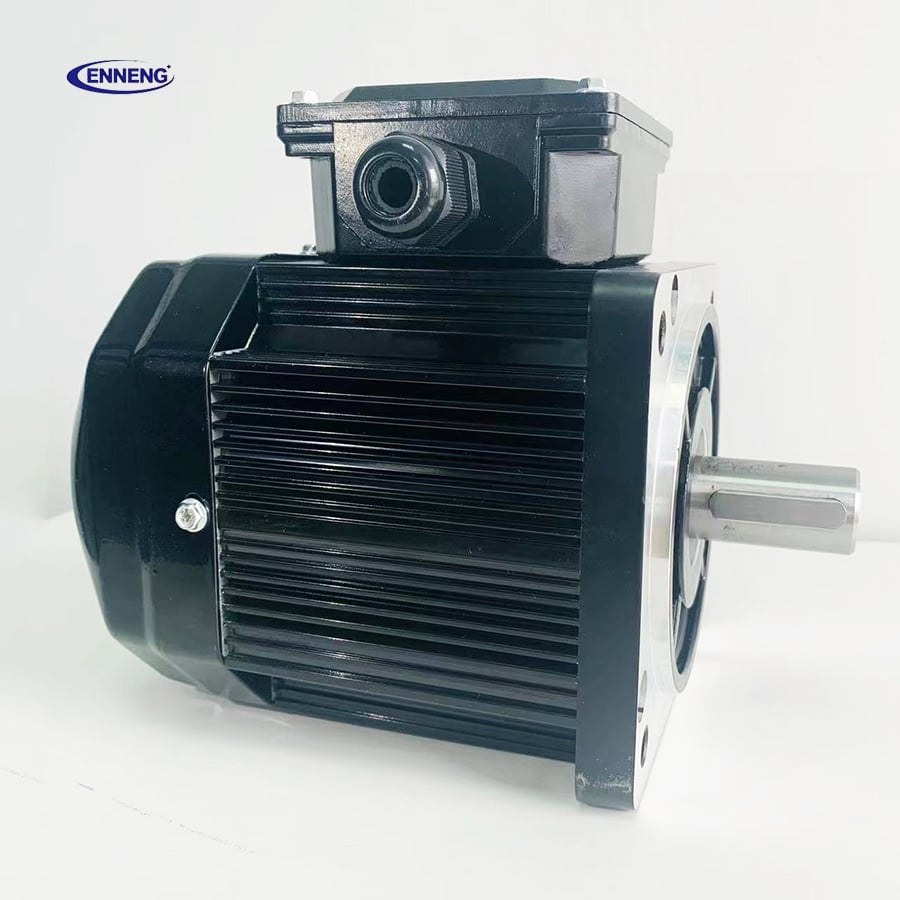
The ENNENG Customization Advantage
No two industrial facilities share identical stator geometry. ENNENG specializes in delivering custom permanent magnet solutions across 5 kW to 5 MW ratings and 110 V to 690 V voltages for water treatment, oilfields, and mining environments. Contact ENNENG Today. Connect with the technical engineering team to receive a customized drive proposal:
- Whatsapp:+86 18562780228
- Litterae Electronicae: [email protected]
- Telephonum: +86 532 66000559
Quaestiones Frequentes
Q: Why is room-temperature remanence insufficient for Retrofit Induction to PMSM magnet selection?
A: Sel selecting a magnet grade based solely on room-temperature remanence overlooks how opposing stator currents and elevated rotor temperatures shift the magnetic operating point toward the knee of the B-H curve. In a Retrofit Induction to PMSM project, engineers must evaluate intrinsic coercivity at maximum rotor hot-spot temperatures so that high starting currents or VFD transients do not cause irreversible demagnetization.
Q: Can an ENNENG Permanent Magnet Motor PMSM replace a standard asynchronous motor directly?
A: Yes, an ENNENG Permanent Magnet Motor PMSM adopts universal IEC and NEMA frame dimensions that match widely used asynchronous motors, making a Retrofit Induction to PMSM upgrade convenient. Additionally, because permanent magnet rotors eliminate rotor copper losses and operate 20 K cooler, ENNENG customizes compact frames spanning 5 kW to 5 MW and 110 V to 690 V.