
 EN

When a conveyor, mixer, kiln, hoist, or turntable must move slowly under a heavy and changing load, the motor decision is rarely about rated kilowatts alone. A PM Synchronous Motor can be a strong fit because it produces controlled torque at low speed without depending on rotor slip. That characteristic can let designers consider a direct-drive layout instead of combining a conventional motor with a large reduction gearbox.
From a procurement standpoint, the useful question is not whether a PM Synchronous Motor is automatically better. It is whether its lower mechanical complexity, control precision, and operating efficiency justify the inverter, engineering, and commissioning work for the actual duty cycle. In continuous production, that is a total-cost-of-ownership decision rather than a catalog-price comparison.
Why low speed and high torque change the motor choice
Slow industrial processes create a demanding combination: the load may need substantial starting torque, stable speed, and long running hours while rotating far below the speed of a standard four-pole induction motor. A geared train can solve that mismatch, but it also introduces gear losses, lubricant management, alignment work, wear, and another potential source of downtime.
A PM Synchronous Motor uses permanent magnets to establish rotor flux. With an appropriately selected drive, the controller regulates stator current and rotor position to make torque available deliberately at low speed. The result is not magic torque; the machine, inverter, cooling arrangement, and mechanical load still have to be sized correctly. It does mean that torque delivery is designed into the motor-drive system rather than created mainly by a high-speed motor and mechanical reduction.
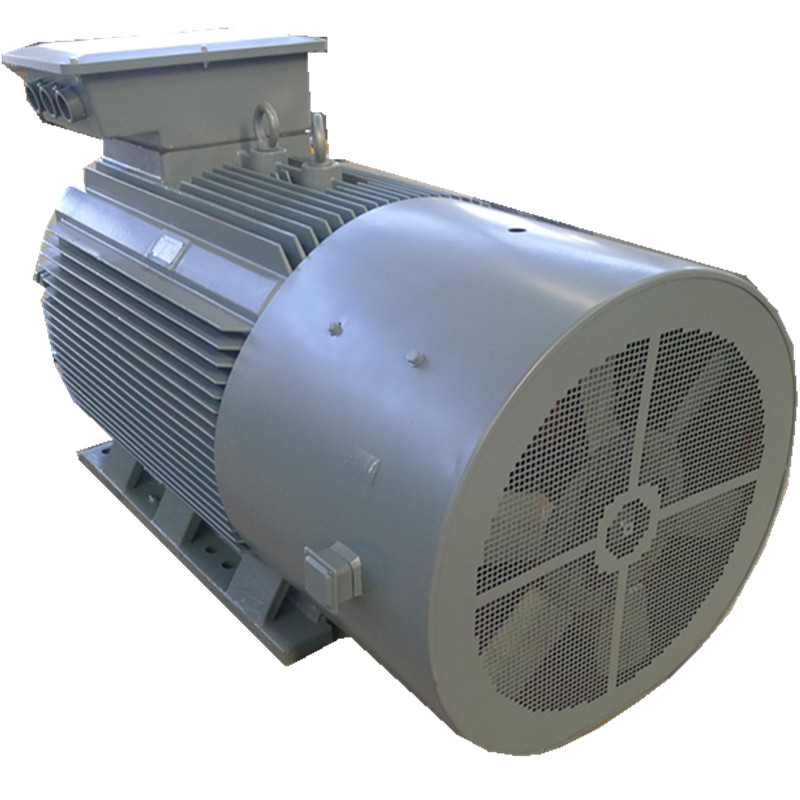
This is why a Permanent Magnet Motor PMSM is often considered for direct-driven conveyors, extrusion lines, agitators, indexing equipment, and slow rotating process machinery. Direct drive can remove a transmission stage, although it does not remove the need for careful shaft, bearing, coupling, and load-inertia design.
Five practical advantages of a PM Synchronous Motor
1. High torque can be controlled at low shaft speed
A PM Synchronous Motor can maintain tightly regulated torque and speed over a low-speed operating range when paired with a compatible variable-frequency drive and feedback strategy. This is valuable where a small speed change affects material tension, mix quality, dwell time, or positioning. Synchronous operation also avoids the speed slip associated with an induction motor under changing load, so the control system has a more direct relationship between commanded and actual rotor speed.
2. Direct drive can eliminate a maintenance-heavy stage
In a direct-drive arrangement, a PM Synchronous Motor is coupled to the load without a gearbox or belt reduction. Removing a component is not automatically a saving, but it can reduce routine tasks associated with lubricant condition, gear wear, belt tension, and alignment. For remote installations or equipment with costly access windows, fewer service-sensitive mechanical parts may carry more value than a small difference in initial purchase price.
The trade-off deserves attention. Direct drive puts the low-speed torque requirement directly on the motor, and a larger-diameter motor may be necessary. Buyers should compare the installed envelope, bearing loads, rotor inertia, and replacement logistics against the gearbox solution rather than assume one architecture wins in every project.
3. Efficiency gains matter most at real operating points
A PM Synchronous Motor does not require rotor current to establish its field, which can reduce rotor-related losses compared with some alternative designs. That can support strong efficiency and power factor in suitable duty cycles. The benefit is most meaningful when the machine runs for many hours and spends much of its time near the operating points used in the evaluation.
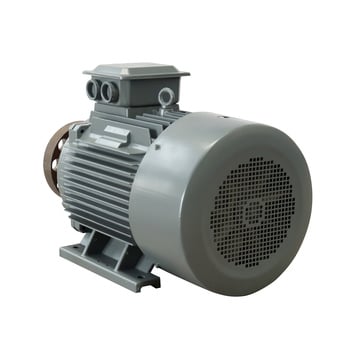
You might be thinking that any oversized motor can simply operate at partial load. The problem is that a favorable nameplate efficiency does not guarantee the same advantage across the full speed and torque map. Request an efficiency map for the motor and drive together, then compare annual load hours, not a single rated-point figure.
4. Compact power and torque density can simplify the machine
For a given process requirement, a PM Synchronous Motor can offer useful torque density and may make it practical to consolidate mechanical components. That can help where space around a drum, mixer, or rotary table is constrained. However, the physical diameter of a low-speed direct-drive unit can be substantial, so compactness must be verified against the actual mounting envelope rather than inferred from motor technology alone.
5. Closed-loop behavior improves process consistency
A properly commissioned PM Synchronous Motor system can respond predictably to load changes, making it useful when stable speed or torque is part of product quality. The same controllability supports controlled acceleration and deceleration, which can reduce shocks in the driven machine. It also makes diagnostics more meaningful because the drive can expose current, speed, fault, and thermal trends that maintenance teams can review.
What must be specified before choosing a PM Synchronous Motor
A good selection starts with the load, not the motor brochure. Ask the supplier and machine team to document the following:
- Continuous and peak torque: state both the normal operating torque and the duration and frequency of overload events.
- Speed range and duty cycle: include hours at low speed, starts per hour, reversals, and any standstill-torque requirement.
- Load inertia and reflected inertia: these values affect acceleration, deceleration, and controller tuning.
- Thermal environment: check ambient temperature, cooling airflow, contamination, enclosure requirements, and low-speed cooling capability.
- Drive and feedback compatibility: confirm the inverter control mode, sensor requirements, cable limits, braking, and fault behavior.
- Mechanical interface: evaluate shaft loads, mounting rigidity, coupling choice, torsional effects, and service access.
Do not skip power quality. In facilities with weak supplies, long motor leads, or shared nonlinear loads, harmonics and voltage disturbances can influence drive behavior in ways that are not visible during a clean factory test. The PM Synchronous Motor, its drive, filters, grounding, and commissioning plan should be reviewed as one system.
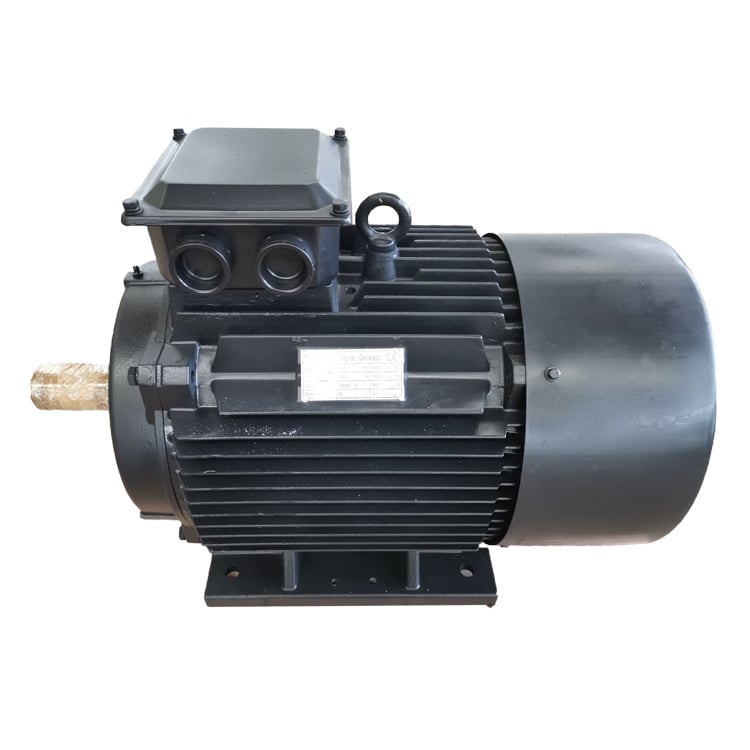
When a gearbox may still be the sensible choice
The advantages of a PM Synchronous Motor are clearest when low-speed torque, long operating hours, control quality, and mechanical simplification align. A conventional motor and gearbox can still be appropriate where speed is fixed, the duty is intermittent, replacement cost must be minimal, or a well-proven gearbox arrangement already meets reliability targets. The decision should reflect downtime exposure, maintenance access, energy use at actual load, and availability of qualified drive support.
A practical evaluation path
- Measure the current load profile instead of estimating it from motor rating alone.
- Model both direct-drive and geared architectures at the required speed and torque points.
- Compare motor, drive, gearbox, installation, maintenance, and downtime consequences over the intended service life.
- Validate the selected PM Synchronous Motor with thermal, inertia, and control tests before releasing the final machine design.
For low-speed, high-torque machinery, the most useful outcome is not simply a more advanced motor. It is a matched motor-drive-mechanical package. When the application supports direct drive and the lifecycle case is sound, a PM Synchronous Motor can deliver stable torque, efficient operation, and a simpler path to reliable industrial production.