
 EN

Why should factories consider long-term operating expenses for PMSM vs Induction Motor Cost evaluation?
A motor purchase order shows an equipment price; the factory then carries the energy draw, controls, service work, heat, and production consequences for years. That is why a useful PMSM vs Induction Motor Cost evaluation starts with operating expense rather than a one-time quote. In procurement reviews, the lower-purchase-price motor can be the right choice for a lightly used, fixed-speed asset. It can also be the expensive choice when it runs long shifts at partial load and makes electricity, cooling, or downtime the larger cost.
The question is not whether a permanent magnet synchronous motor (PMSM) is automatically better. It is whether its higher initial price, magnets, and possible drive changes are justified by the real duty cycle. A sound comparison makes those assumptions visible before a factory commits to a fleet standard or a retrofit.
Why purchase price alone distorts a PMSM vs Induction Motor Cost decision
An induction motor is familiar, widely available, and often less expensive at the point of purchase. A PMSM can cost more because of magnetic materials, design choices, and the need to coordinate its operation with a suitable inverter or control system. Those differences matter, but they are only one line in total cost of ownership.
For a continuously operating pump, fan, compressor, conveyor, or process machine, electricity is paid for every operating hour. A small efficiency difference becomes an annual energy difference only after it is multiplied by shaft load, running hours, electricity tariff, and actual part-load behavior. The calculation should use measured or credible operating data—not just a peak nameplate efficiency number. Load variation, ambient temperature, harmonics, and control settings can all move the result.
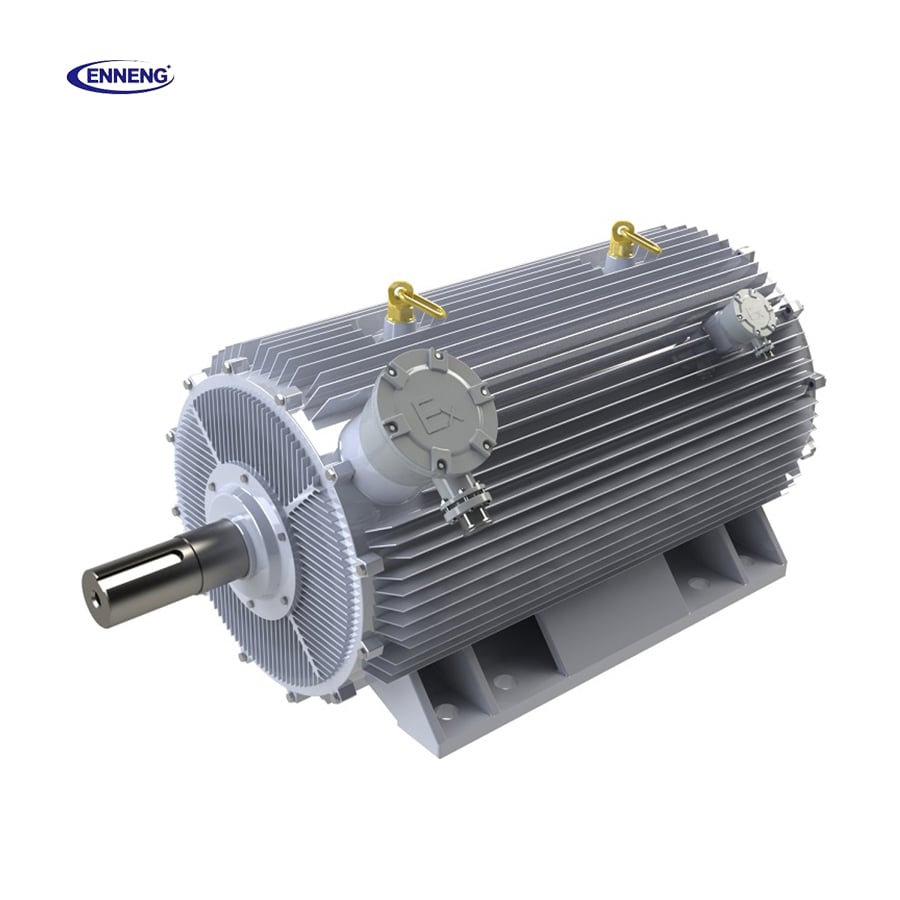
A practical ownership view includes acquisition, installation, energy, maintenance, spares, production disruption, and end-of-life considerations. It also includes the cost of getting the comparison wrong. If a motor creates excessive heat in a crowded enclosure, for example, the cost may appear as shorter insulation life or additional cooling rather than on the motor invoice.
Build the operating-cost model around the factory duty cycle
Start with the asset, not the motor technology. Record the actual power demand across a representative week or production cycle, then separate full-load periods from the hours where the equipment idles, throttles, or runs below rated load. PMSMs are often considered where partial-load efficiency matters; induction motors can still make economic sense where the duty is low, fixed, or the installation has limited budget for controls.
| Cost input | What to collect | Why it changes the decision |
|---|---|---|
| Energy use | Load profile, annual run hours, tariff, measured kW | Turns efficiency at real load into an annual cost estimate. |
| Controls and installation | Existing VFD compatibility, wiring, commissioning, enclosure work | Shows whether a retrofit requires more than a motor swap. |
| Maintenance | Labor history, bearing and cooling issues, spare stock | Captures recurring expense beyond the purchase order. |
| Downtime exposure | Lost production, restart time, criticality, bypass options | Prevents a low unit price from hiding an expensive failure event. |
| Life and disposal | Expected service interval, repairability, replacement plan | Keeps the review focused on the full asset horizon. |
Use the same assumptions for both options. For each operating band, estimate input power from required shaft power divided by the verified efficiency at that point. Multiply by annual hours and electricity price. Then add the installation and expected maintenance costs over a stated evaluation period. It is better to show a range for uncertain inputs than to present a single false-precision payback number.
Efficiency needs context, not marketing shorthand
International efficiency classes offer a useful starting point. IEC 60034-30-1 provides a framework for comparing single-speed motor efficiency classes, including IE1 through IE4, but factories should still check the rating scope, test conditions, speed, and load point. Two motors with attractive ratings may behave differently in a specific controlled system.
Ask suppliers and internal engineering teams for efficiency data at the load bands the asset actually sees. Confirm whether the comparison includes the drive and any system losses. A PMSM may improve the operating picture when variable-duty equipment spends much of its time away from rated load. On the other hand, a standard induction motor may retain an advantage when the machine runs infrequently or its energy use is too small to recover a higher installed cost.
Do not separate motor choice from system and reliability costs
The motor does not operate alone. Fan and pump applications may gain more from correct speed control and process tuning than from a technology change in isolation. Check impeller or fan behavior, throttling practices, gearbox losses, bearing loads, ventilation, and the control logic. The U.S. Department of Energy notes that energy-management practices and efficient equipment can create motor-system savings; the important word is system.
Reliability deserves the same discipline. Compare access for service, lead times for critical spares, commissioning support, protection settings, and the consequence of an unplanned stop. A factory with a redundant pump can tolerate a different risk profile from a single-line process where one motor failure halts shipment. Maintenance cost is not simply the number of service events; it is labor, safety access, lost output, and recovery time.
How to evaluate a Retrofit Induction to PMSM proposal
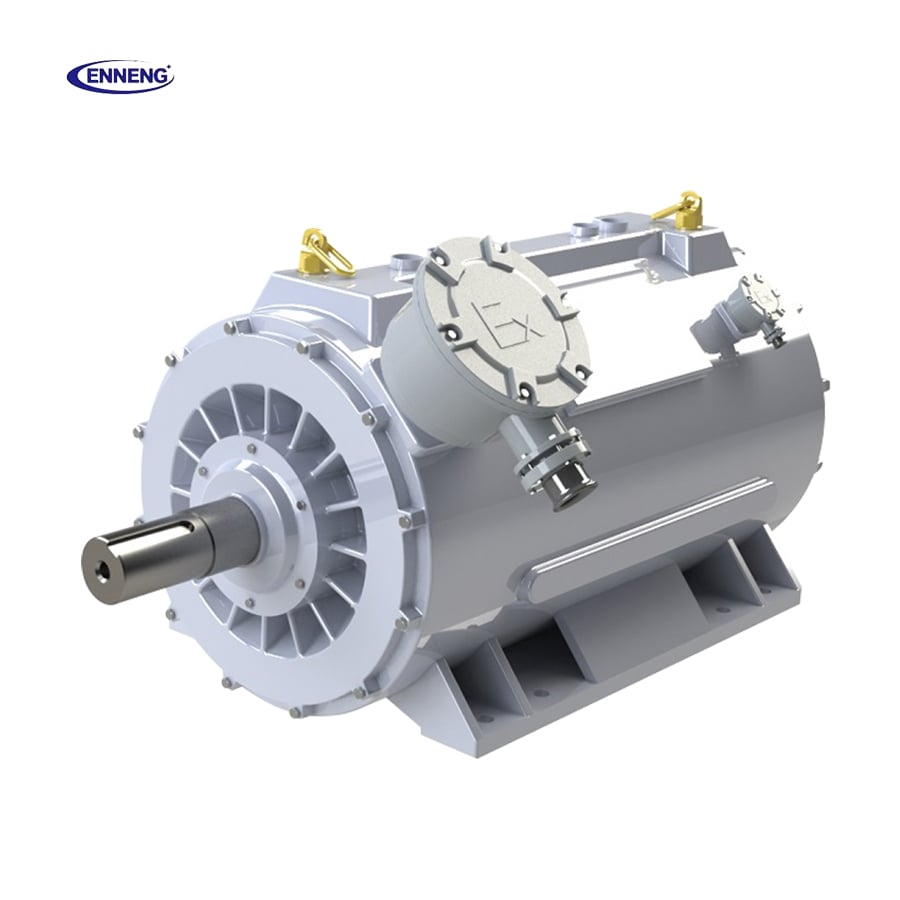
A Retrofit Induction to PMSM project should be treated as an engineering change, not a catalog substitution. Verify shaft dimensions, mounting, load inertia, starting and low-speed torque, speed range, cooling at reduced speed, encoder requirements if applicable, drive sizing, cable length, grounding, and electromagnetic compatibility. Review the existing VFD rather than assuming every inverter setup will provide the same control quality or protection behavior.
Before approval, establish a baseline with logged kW, production rate, run hours, and maintenance history. After commissioning, compare the same measures over a similar operating period. This protects the business case from seasonal changes, altered production mix, or a maintenance intervention that would have reduced consumption anyway. If the project has a pilot line, a limited trial can be more credible than extrapolating a short test across every asset.
A decision rule procurement and engineering can share
Put the alternatives into three scenarios: conservative, expected, and high-utilization. Vary electricity price, annual hours, expected efficiency at real load, installation scope, and downtime cost. If the PMSM case only works under the most optimistic assumptions, defer it or narrow it to the assets with the clearest duty-cycle fit. If it remains favorable under conservative assumptions, the higher initial outlay may be a defensible long-term operating decision.
In short, a PMSM vs Induction Motor Cost review is strongest when it asks how the factory will operate the motor, not just what it will pay to buy it. Calculate energy from the actual load profile, price retrofit work honestly, include service and production risk, and validate performance after installation. That approach gives both procurement and engineering a decision they can explain—and revise as real operating data arrives.
PMSM vs Induction Motor Cost review checklist
Use this compact record when the team needs a repeatable decision trail. Each PMSM vs Induction Motor Cost review should state the load band, annual hours, energy price, and evidence source. In a PMSM vs Induction Motor Cost review, separate a measured value from an assumption. A PMSM vs Induction Motor Cost review should also name the person responsible for validating controls and mechanical fit.
Repeat the same questions for every candidate asset. A PMSM vs Induction Motor Cost workbook is useful only when its inputs can be checked after commissioning. The PMSM vs Induction Motor Cost conclusion may differ between two apparently similar motors because their load histories, tariffs, and production criticality differ.
For a Retrofit Induction to PMSM proposal, document the pre-change trend. During a Retrofit Induction to PMSM pilot, compare matched production periods. After a Retrofit Induction to PMSM installation, verify protection and operating temperature. A Retrofit Induction to PMSM review should identify the owner of any unresolved compatibility item. Finally, use the Retrofit Induction to PMSM result to update—not replace—the original lifecycle model.
That discipline makes a PMSM vs Induction Motor Cost decision auditable. It also keeps a PMSM vs Induction Motor Cost discussion centered on factory outcomes rather than a single catalog figure. Revisit the PMSM vs Induction Motor Cost model whenever tariffs, throughput, or maintenance conditions change.