
 EN

A motor purchase can look straightforward until an operating team has lived with it for several years. The invoice price is visible on day one; electricity use, speed-control compatibility, unplanned stoppages, maintenance access, and replacement logistics arrive later. That is why a PM Synchronous Motor should be evaluated as a lifecycle decision rather than as an isolated component purchase.
From a procurement standpoint, the useful question is not “Is the motor more efficient?” but “Which cost drivers will this motor change in our actual duty cycle?” A Permanent Magnet Motor PMSM can be a strong option where loads vary, speed control matters, or installed equipment is expected to operate for many hours. It is not automatically the lowest-cost answer for every constant-load application, but its operating characteristics can improve the total cost of ownership (TCO) when they match the job.
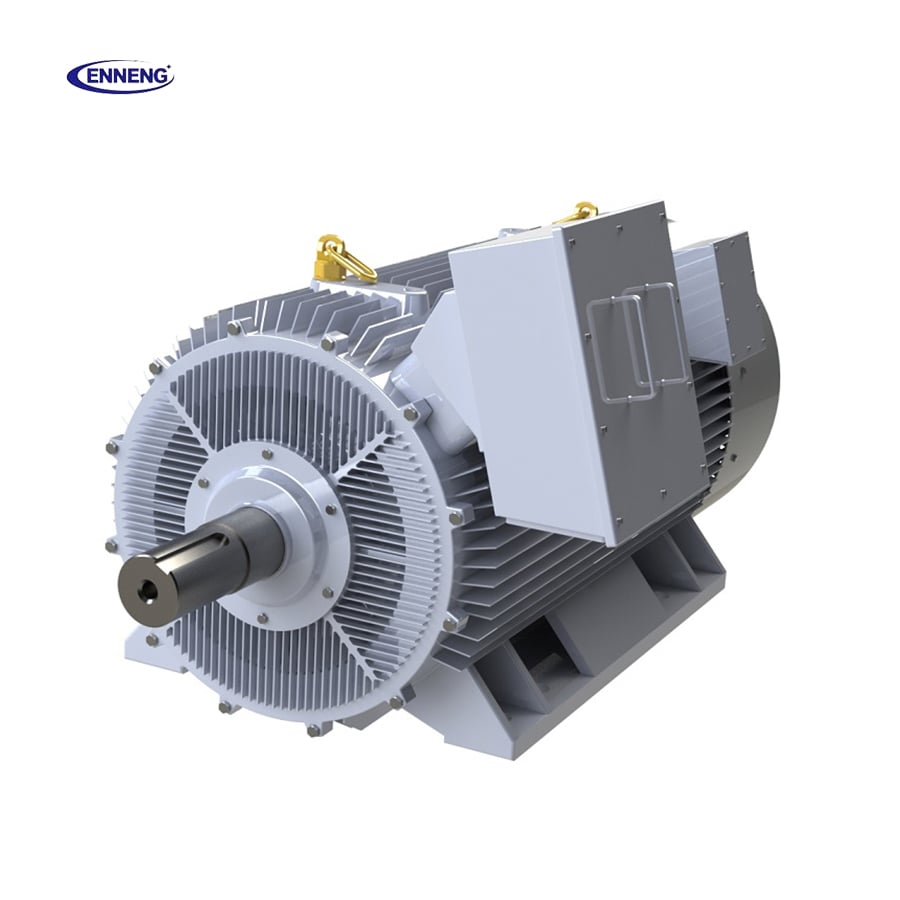
Start with the full cost of ownership, not the motor price
Industrial TCO normally includes five connected categories: acquisition and installation; energy consumption; controls and system integration; planned maintenance; and the financial impact of downtime. A low purchase price can be quickly outweighed by higher electrical losses or a control arrangement that is difficult to commission. Conversely, a premium motor only creates value if its efficiency and operating behavior are used in the process.
This distinction matters because motor systems are a material part of industrial energy management. The U.S. Department of Energy notes that energy-management practices and efficient equipment can produce energy and cost savings in motor systems. For specification work, IEC 60034-30-1 also provides a common framework for comparing applicable motor efficiency classes, including IE3 Premium Efficiency and IE4 Super-Premium Efficiency. Those references are useful checkpoints, not proof that any individual installation will achieve a particular saving.
Where a PM Synchronous Motor can lower energy cost
A PM Synchronous Motor uses permanent magnets in the rotor rather than relying on rotor current to establish its magnetic field. In practical terms, that can reduce rotor-related losses and support high efficiency, particularly when the application does not run at one fixed point all day. Pumps, fans, compressors, conveyors, mixers, and process equipment often experience changing flow, pressure, throughput, or schedule requirements.
The shift that changes how buyers assess a motor is moving from peak nameplate efficiency to the load profile. A motor that looks excellent at rated load may spend much of its service life well below that point. If a process operates across a variable duty cycle, partial-load efficiency deserves the same attention as the nameplate figure. That is where a Permanent Magnet Motor PMSM may create a meaningful operating-cost advantage.
There is an important boundary: if a machine truly runs at a stable load and speed, the incremental benefit of a PM design may be smaller than in a variable-speed process. Ask for efficiency curves at the expected operating points, then compare annual energy use using measured or defensible duty-cycle assumptions. This is more reliable than applying a generic percentage saving to every installation.
Speed control can protect both process economics and equipment
When paired with a properly selected variable-frequency drive, a PM Synchronous Motor can provide accurate speed and torque control. The value is often broader than electricity consumption. Better speed matching can reduce throttling or mechanical losses, help the process follow demand, and avoid repeatedly forcing equipment to operate at an unsuitable fixed speed.
However, a motor-and-drive package must be reviewed as a system. Confirm the drive’s PM motor control capability, feedback requirements, cable length limits, cooling arrangement, protection functions, and startup behavior. A control mismatch discovered during commissioning can erase an apparent hardware saving through engineering time and production delay. In other words, a higher-efficiency motor is not automatically a lower-cost installation unless the surrounding system is ready for it.
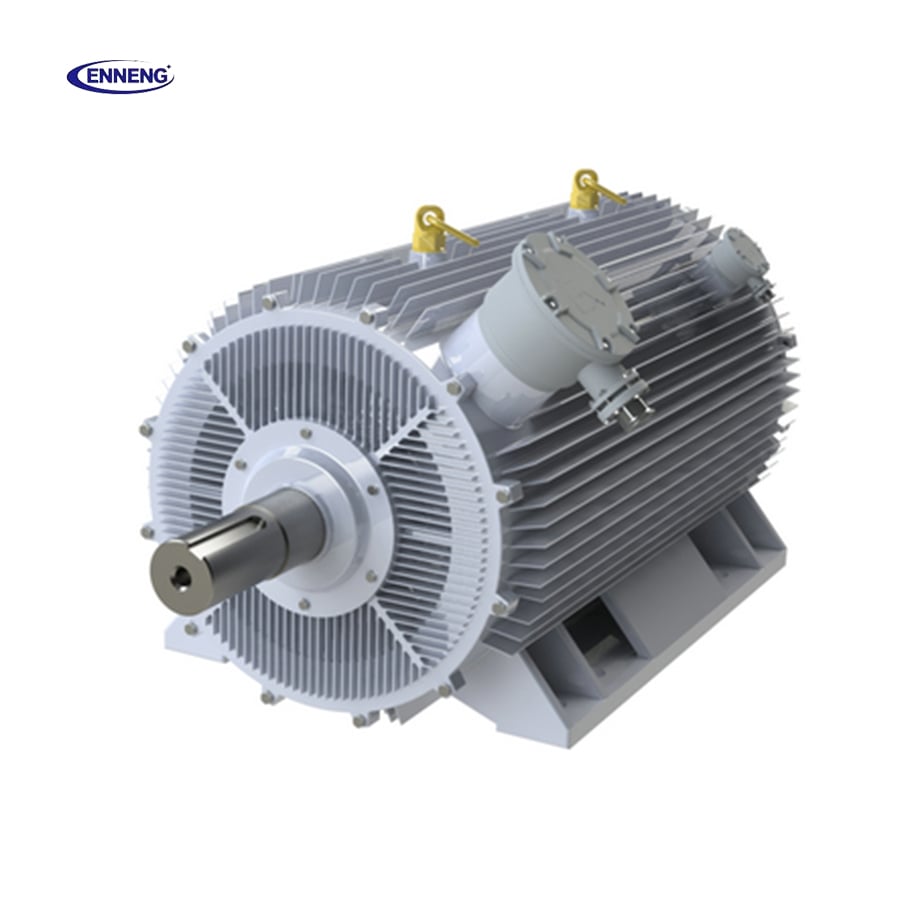
Maintenance economics are about fewer interventions and faster recovery
Long-term maintenance cost is not simply the price of bearings or labor hours. It includes access to service information, spare-parts planning, alignment quality, enclosure suitability, thermal conditions, and the time required to restore production after a fault. A PM Synchronous Motor can support a compact, high-power-density design in some applications, which may help where installation space is constrained. Yet compactness should not substitute for a serviceability review.
For example, verify the enclosure and IP rating against dust, moisture, washdown, or corrosive exposure; verify the permitted ambient temperature; and make sure the cooling path will remain clear in the installed location. The real-world lesson is that a good motor can still age poorly in a bad environment. Temperature, mounting rigidity, power quality, and maintenance practice can determine whether projected lifecycle cost is achieved.
Downtime deserves its own line in the TCO model. A less frequent intervention is helpful, but the recovery plan matters just as much. Identify the critical spares, confirm lead times before purchase, document drive parameters, and decide whether a replacement can be commissioned without recreating the entire control setup. These actions are modest compared with the cost of a prolonged production interruption.
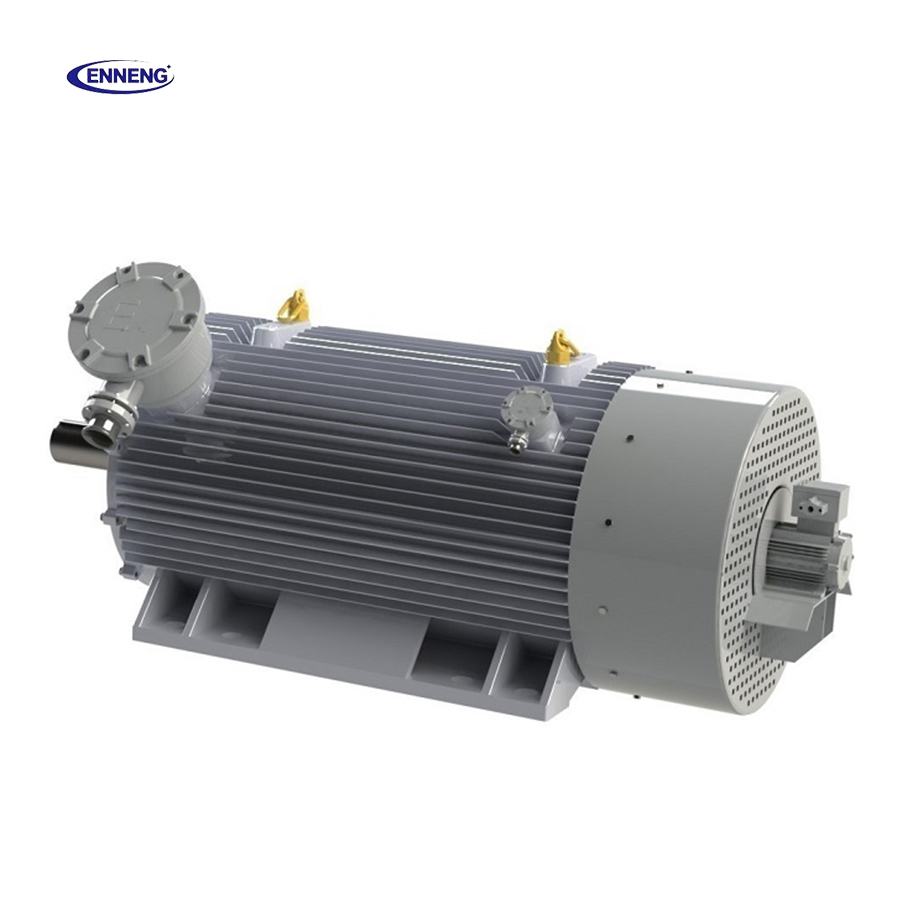
Use a TCO worksheet before comparing quotations
A disciplined comparison keeps marketing claims and unit-price bias from dominating the decision. For each candidate, build a worksheet that covers the same assumptions:
- Operating profile: annual hours, load bands, speed range, starts, and expected future demand changes.
- Electrical performance: efficiency at the relevant load points, drive losses, supply conditions, and energy price assumptions.
- Integration: drive compatibility, controls engineering, mechanical fit, cable and cooling requirements, and commissioning scope.
- Reliability and service: environmental protection, bearings, monitoring needs, spare availability, documentation, and local technical support.
- Downtime exposure: cost per hour of disruption, replacement lead time, and the practical recovery procedure.
Then test the assumptions. If an estimate depends on a high load factor that operations cannot support, revise it. If a supplier quotes an efficiency class, request the applicable documentation and confirm that the comparison uses the same rating conditions. Specificity here is not bureaucracy; it is how a TCO model becomes useful to engineering, procurement, and operations at the same time.
When the case for PM technology is strongest
A PM Synchronous Motor is most compelling when an industrial user has a variable-duty process, long annual run time, a need for precise control, or a costly downtime profile. It can also make sense where higher power density or lower-speed, high-torque operation changes the mechanical design. The commercial case becomes weaker when the duty cycle is fixed, the control system cannot support the motor properly, or the installation environment creates risks that have not been addressed.
The practical takeaway is not to replace every induction motor. It is to avoid comparing motors only when the purchase order is being written. Evaluate the load profile, integration work, efficiency evidence, maintenance plan, and recovery path together. When those factors align, a Permanent Magnet Motor PMSM can turn a higher initial investment into a lower and more predictable cost of ownership over the operating life of the equipment.