 EN

When a high-power industrial motor runs hot, the first instinct is often to add a larger fan or specify a higher insulation class. Those choices can help, but they do not solve the underlying question: can heat move reliably from the losses generated inside the machine to the installation environment? A capable Rare Earth Motor Manufacturer treats thermal dissipation as a complete design path, from electromagnetic loading and winding construction through the frame, cooling arrangement, drive settings, and actual duty cycle.
That approach matters especially for permanent-magnet machines. Their compact active parts and high torque density can be attractive in industrial retrofits, pumps, fans, compressors, conveyors, and other VFD-driven equipment. Yet compactness reduces the margin for assumptions. If the load cycle, ambient temperature, enclosure, or speed range differs from the design basis, a motor that looks adequate on a nameplate can reach an unfavorable thermal equilibrium in service.
Start with the real heat sources, not the enclosure alone
A high-power motor does not create one generic kind of heat. Copper loss in the stator winding rises with current; iron loss changes with flux density and electrical frequency; mechanical losses arise in bearings, seals, windage, and any cooling fan. Drive harmonics can add loss as well. A Rare Earth Motor Manufacturer should model the dominant losses for the intended speed and torque range before selecting fins, fans, or a cooling jacket.
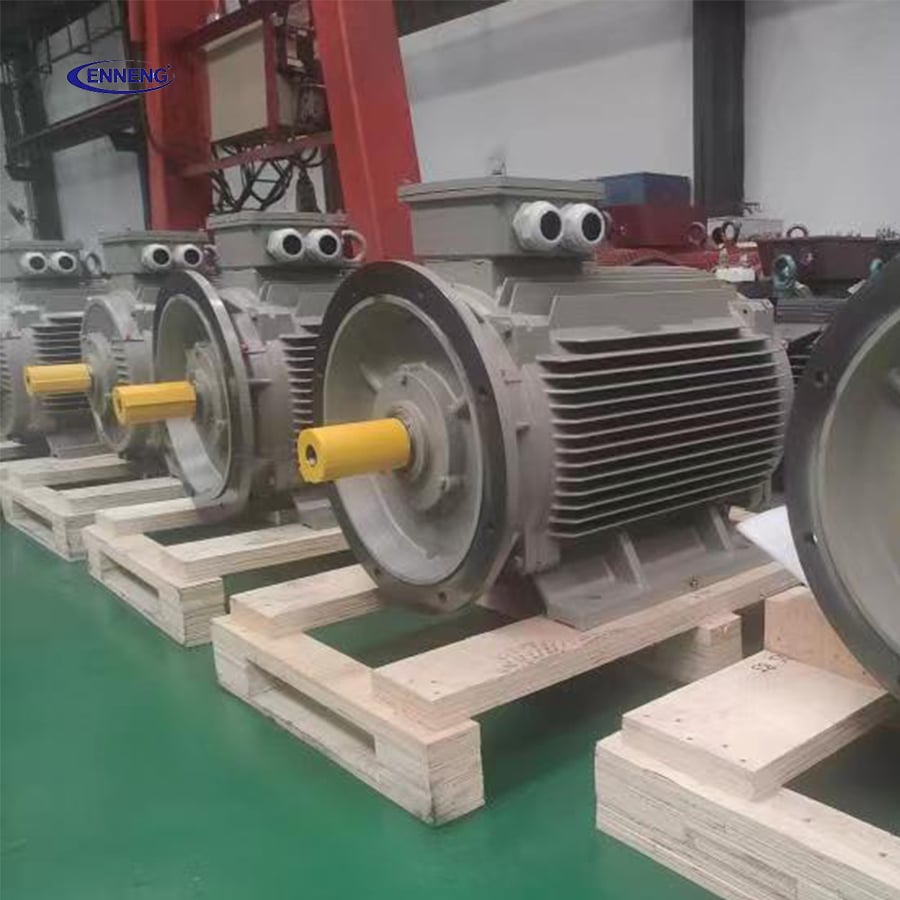
For example, a pump motor that spends much of its time at reduced speed may not receive the same shaft-mounted fan airflow available at rated speed. Conversely, a machine repeatedly asked for high torque at low speed can impose substantial winding loss while its self-ventilation is weakest. This is why a thermal review needs the load profile, acceleration frequency, overload duration, VFD switching conditions, ambient range, altitude, and installation clearance—not simply rated kW.
The practical shift is from reading a fixed power rating to checking condition-dependent output. Peak efficiency is useful, but continuous thermal capacity under the actual duty cycle is what protects uptime.
Build a low-resistance path from winding to ambient air
Thermal design works by limiting resistance along each section of the heat path. In a permanent-magnet motor, heat often begins close to the stator conductors, then moves through insulation, impregnation material, the slot region and laminations, the housing, and finally into moving air or liquid. Weak contact at any interface can create a local hot spot even when the outer frame feels acceptable.
Winding and slot decisions
For a Rare Earth Motor Manufacturer, winding layout is both an electromagnetic and thermal decision. Conductor fill, parallel paths, end-winding geometry, impregnation quality, and contact between the active stack and housing all influence how easily copper loss leaves the winding. In-house winding capability can be useful during Custom PM Motor Design because voltage, speed, torque, and thermal limits should be resolved together rather than treated as separate order-line options.
Insulation class is a safety margin, not permission to ignore temperature rise. IEC 60034-1 is commonly used as a framework for rotating-machine rating and temperature considerations. The right review asks which temperature measurement method, ambient condition, and allowable rise apply to the project. It does not infer an operating limit from insulation class alone.
Frame, fins, and conduction interfaces
A larger ribbed frame can increase external area, but only if the heat can reach it. Manufacturers should examine lamination-to-frame contact, housing material, fin geometry, mounting orientation, and whether dirt accumulation or a crowded machine room will reduce convection over time. In a sealed motor, the enclosure that protects against contamination can also increase thermal resistance. The correct balance depends on the site, not on a universal preference for an open or closed design.
Choose cooling by the speed range and site conditions
Cooling should be specified as an operating system. IEC 60034-6 provides the IC-code convention for describing cooling methods, which helps engineering teams distinguish between self-ventilated, separately ventilated, liquid-cooled, and other arrangements. A Rare Earth Motor Manufacturer can use that shared language to prevent a proposal from saying only “cooled motor” when the application needs a defined airflow source and path.
- Self-ventilation: Often practical when speed remains high enough for predictable fan performance and the installation has clean airflow.
- Independent forced ventilation: Worth assessing for wide-speed VFD operation, sustained low-speed torque, or hot enclosures, because cooling does not fall with shaft speed.
- Liquid cooling: Can be appropriate where space is limited, power density is high, or air circulation is poor, provided coolant quality, connections, service access, and leak management are designed into the machine system.
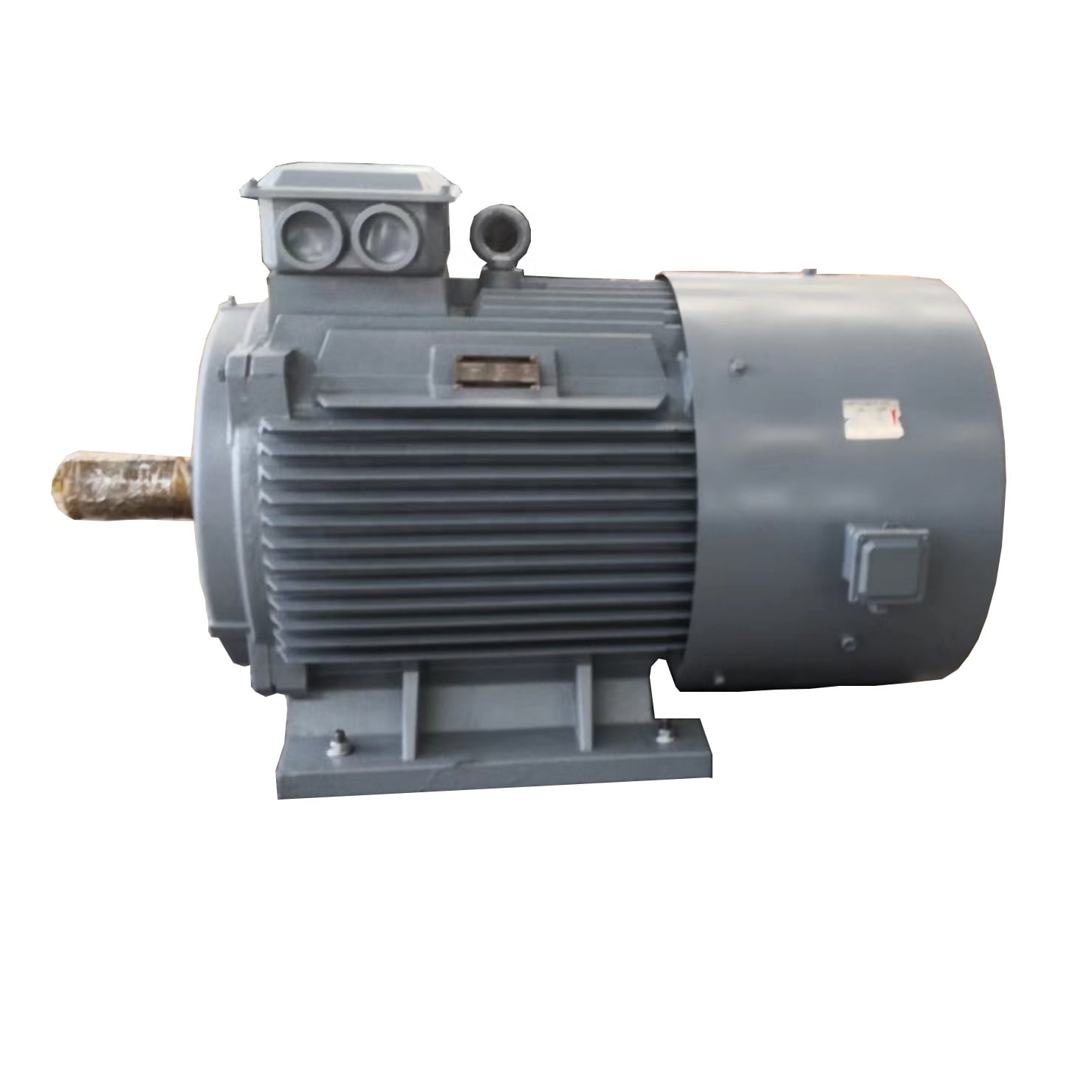
Ambient conditions deserve the same discipline. A 40°C ambient is a common reference condition in many motor-rating discussions; a hotter room leaves less temperature-rise margin. Reduced air density at elevation can also weaken convection. If an installation is hot, high-altitude, dirty, enclosed, or subject to recirculated discharge air, derating and cooling selection should be confirmed before production.
Protect rare-earth magnets as well as the winding
Thermal performance in a permanent-magnet motor is not limited to insulation. Magnet properties are temperature-sensitive, and the rotor temperature may differ materially from the stator temperature measured during a routine test. A Rare Earth Motor Manufacturer should therefore consider rotor loss, magnet grade, expected operating temperature, mechanical retention, and the effect of fault or overload events on demagnetization margin.
The exact material grade and allowable temperature range must be confirmed for a specific design. What can be stated generally is that thermal stability should be evaluated alongside magnetic energy and mechanical retention. This is particularly important for compact high-power machines, where high current density and limited internal airflow can make local temperatures more consequential.
Use drive and mechanical integration to reduce avoidable heat
Thermal optimization does not stop at the motor factory. A Custom PM Motor Design review should include the VFD, cable length, control tuning, acceleration profile, coupling alignment, bearing arrangement, and inlet or discharge airflow around the installed motor. Excess current caused by poor tuning, unexpected cyclic load, or mechanical misalignment becomes heat whether the source is electrical or mechanical.
There is also a useful distinction between an insulation class and a cooling solution. A higher thermal class may increase material tolerance; it does not improve heat extraction by itself. Similarly, a bigger external fan does not correct a winding design that was sized for a lighter duty cycle. A manufacturer and end user get better results when they review loss generation and heat rejection together.
What buyers should ask a Rare Earth Motor Manufacturer
Ask for the assumptions behind the rating: duty cycle, ambient temperature, speed range, cooling method, measurement approach, and drive conditions. Request that the thermal test plan match the most demanding sustained operating point, not just a brief full-speed run. If the application will operate outside common conditions, ask how derating is handled and which design inputs must be frozen before winding and frame choices are released.
For OEMs and retrofit teams, the most valuable outcome is not a generic promise that a motor “runs cool.” It is a documented thermal design basis that connects the application to the winding, magnets, enclosure, cooling method, and verification procedure. That is how a Rare Earth Motor Manufacturer can support reliable high-power industrial motor performance while keeping the configuration practical to manufacture and maintain.
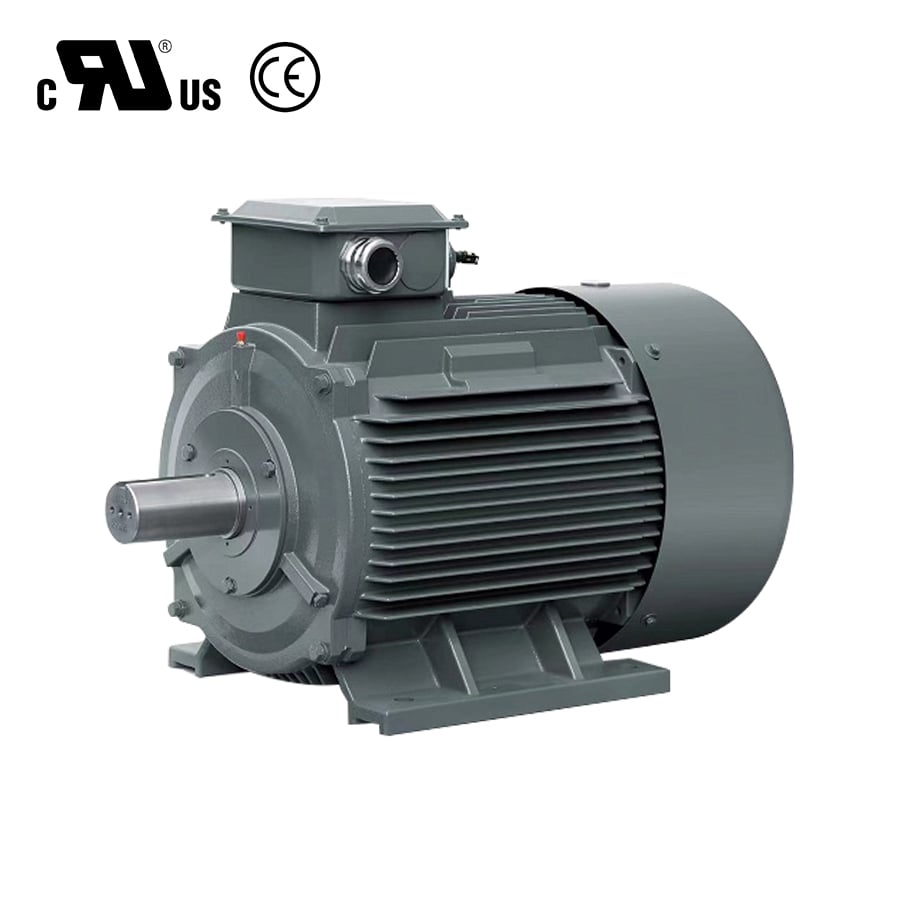
If you are evaluating commercial permanent magnet motors for sale and need an engineered drive solution that guarantees efficiency and longevity, ENNENG is your trusted partner.Contact ENNENG Today.Speak to our technical engineering team to receive a customised drive proposal.
- WhatsApp: +86 18562780228
- E-Mail: [email protected]
- Phone: +86 532 66000559