
 EN

In a water-supply or wastewater-treatment line, a pump motor is noticed when a pressure setpoint is missed, a lift station alarms, or a standby unit must start. A Centrifugal Pump Motor IE5 does not eliminate those risks by itself, but it can provide a more efficient, controllable drive foundation when paired with a correctly selected variable-frequency drive (VFD).
The practical shift is to treat the motor, drive, pump curve, controls, installation, and maintenance plan as one reliability system. That is where lower losses can support steadier operation and fewer avoidable interventions.
Downtime Starts With a System Mismatch, Not a Nameplate Alone
Unplanned downtime may originate at the motor, but it can also be set up by an oversized pump, repeated throttling, poor VFD commissioning, inadequate protection, voltage imbalance, overloaded bearings, seal distress, debris, or an untested standby unit. Replacing only the motor can leave the failure mechanism in place.
A Centrifugal Pump Motor IE5 is most useful when it is selected around the actual duty point. The right questions are: What flow and head are needed across normal, peak, and low-demand periods? How many starts occur? What is the ambient temperature? Is the equipment exposed to moisture, corrosive gases, washdown, or flooding risk? And can the maintenance team obtain spares and diagnostic information before a fault becomes an outage?
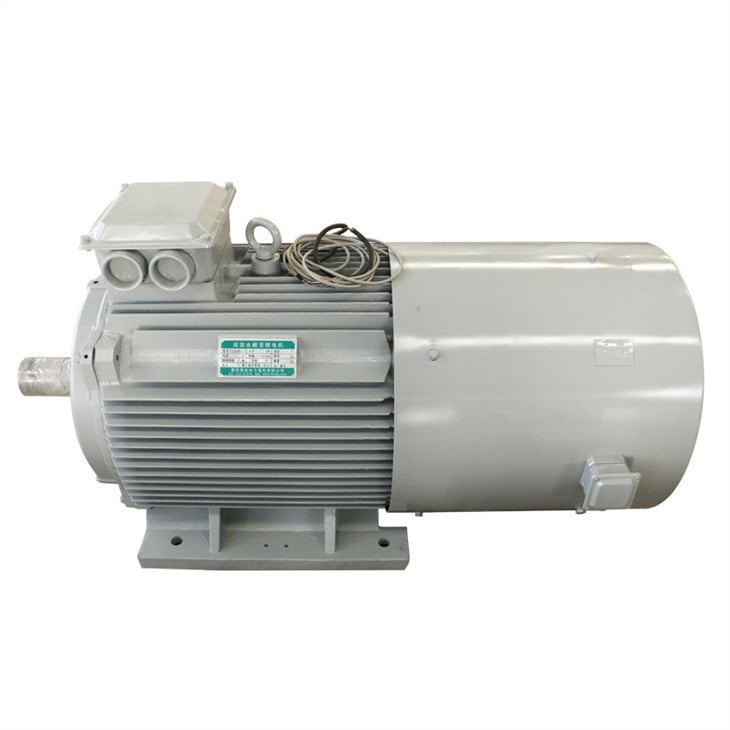
That assessment matters because reliability is harder to verify from an efficiency class than from a complete application review. An IE5 efficiency claim should therefore be checked alongside the motor’s speed range, cooling method, insulation system, bearings, ingress protection, VFD compatibility, protection settings, and the actual pump curve.
How IE5 Efficiency Helps the Pump Line Operate With Less Stress
For a Centrifugal Pump Motor IE5 project, efficiency is valuable only after the required flow, head, environment, and control method are established.
IE5 is commonly used to describe ultra-premium motor efficiency in the context of applicable IEC efficiency classifications. The engineering value is lower electrical loss for a given operating requirement. Less loss can mean less waste heat in and around the motor, which is useful in enclosed pump rooms or installations with elevated ambient temperature. It is not a promise of a particular service life, but it can reduce one source of thermal stress when the motor is correctly sized and installed.
The benefit becomes more relevant when duty changes. Many water and wastewater pumps do not run continuously at one ideal flow. A motor-and-drive package that follows demand can avoid some disruption associated with forcing a fixed-speed pump to meet varying conditions through throttling or frequent starts and stops.
For an IE4/IE5 Efficiency Motor evaluation, compare performance at the planned operating points rather than comparing only full-load nameplate values. A motor that looks efficient at one point but is poorly matched to the control strategy may still create heat, nuisance trips, or unstable operation elsewhere in the duty cycle.
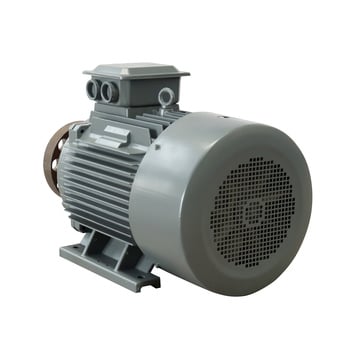
Why Variable Speed Matters in Centrifugal Pump Service
The centrifugal-pump affinity laws explain why speed control deserves attention. Under comparable conditions, flow changes approximately with speed, head changes with the square of speed, and pump power changes with the cube of speed. This does not mean every speed reduction will produce the same field result; the pump curve, system curve, minimum-flow requirement, suction conditions, and fluid properties still need verification. It does show why a properly commissioned VFD can be a valuable reliability tool as well as an energy-control tool.
Instead of repeatedly running the pump against a restrictive valve or cycling it sharply between off and full speed, a controlled ramp and an appropriate speed setpoint can help the system follow demand more smoothly. Smoother control may reduce hydraulic shock and avoid needless thermal cycling. The result is not “IE5 prevents failures”; the result is a better opportunity to run the complete pump set nearer to the conditions it was designed to handle.
Five Ways a Centrifugal Pump Motor IE5 Can Support Uptime
1. Reduced heat burden at the required duty
A Centrifugal Pump Motor IE5 should be assessed at the expected operating points, not selected solely from a peak nameplate figure.
Electrical losses become heat. When an IE5 motor is correctly sized for the duty, lower losses can reduce the thermal burden on windings and nearby equipment. This is particularly relevant in compact stations or rooms where ventilation is limited. Confirm the ambient rating, cooling path, and derating requirements; an efficiency class cannot compensate for blocked airflow or an unsuitable enclosure.
2. Better fit for demand-led control
When combined with a compatible VFD and pump curve, a Centrifugal Pump Motor IE5 can support speed-based control over a changing flow requirement. The key is commissioning: establish speed limits, minimum-flow protection, acceleration and deceleration ramps, pressure or level setpoints, and alarm response before relying on the system in normal service.
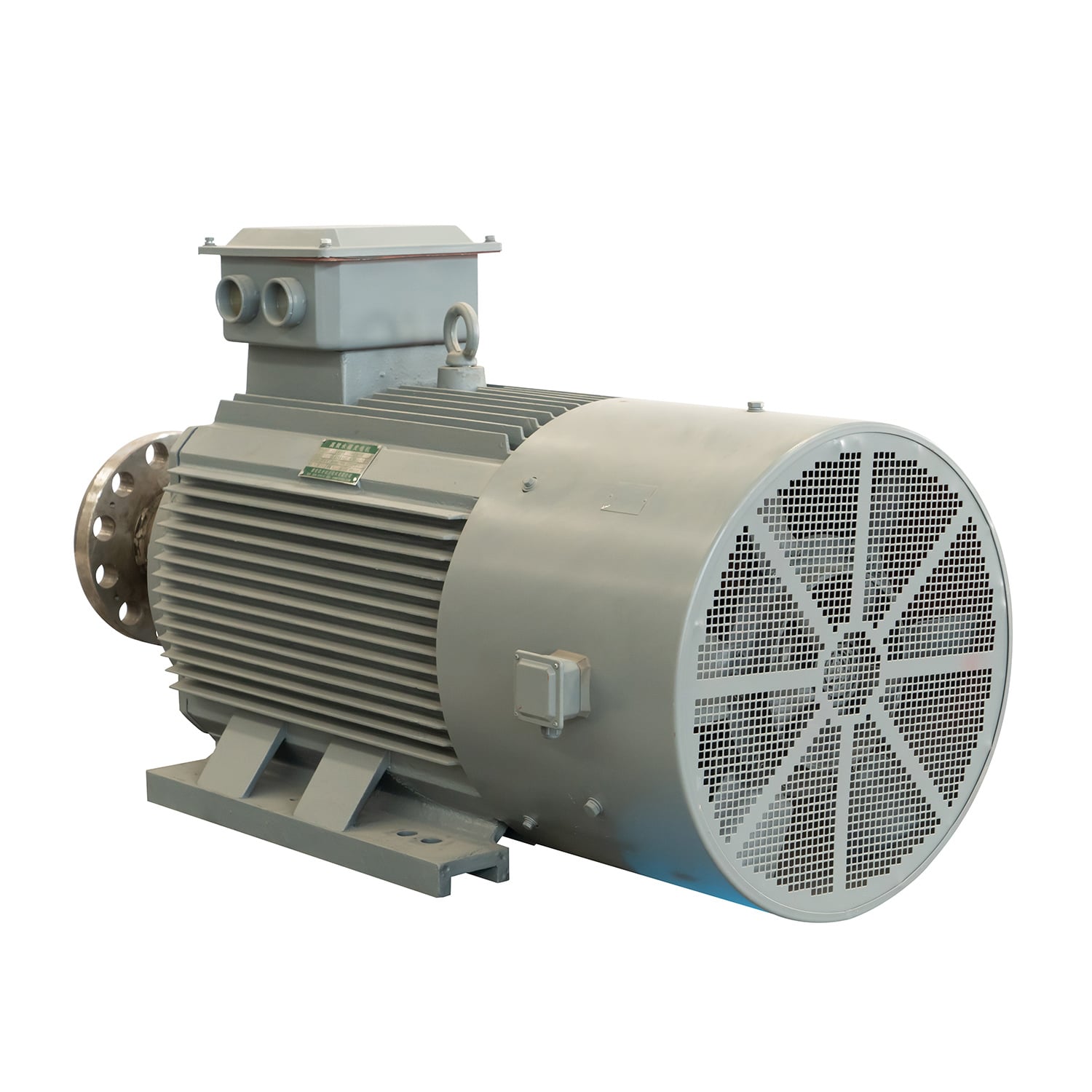
3. Fewer avoidable starts and abrupt transitions
Starting current, mechanical shock, and repeated transitions are system concerns. A drive-based operating strategy can reduce abrupt acceleration compared with across-the-line starts where the application allows it. Review the process consequences of slower ramps, because some emergency or peak-demand cases need a different response. The objective is controlled operation, not the lowest possible speed at all times.
4. More useful condition monitoring conversations
A motor upgrade creates an opportunity to define what will be monitored: current trend, temperature, vibration, insulation condition, VFD fault history, bearing condition, suction pressure, discharge pressure, and run-hours. The useful baseline is established at commissioning. Once a normal pattern is documented, maintenance staff can investigate a drift before it becomes a forced outage.
5. A clearer lifecycle decision
The purchase price is visible; the cost of an interrupted water or wastewater process is usually spread across labor, emergency response, process risk, spare availability, and deferred maintenance. An IE4/IE5 Efficiency Motor should therefore be evaluated as part of total operating cost, including controls, installation, protection, commissioning, and planned maintenance; not as an isolated efficiency upgrade.
Selection Checks Before You Specify the Motor
Specifying a Centrifugal Pump Motor IE5 begins with the pump duty and process risk, then moves to motor efficiency, construction, drive compatibility, and serviceability.
- Confirm the duty profile: Record normal, low, and peak flow and head rather than selecting only from a nominal point.
- Review the pump and system curves: Identify the intended operating region, minimum-flow constraint, and any risk of unstable operation or cavitation.
- Match the VFD and motor: Verify voltage, speed range, cable considerations, insulation suitability, bearing protection needs, and harmonic or EMC requirements.
- Check the environment: Account for humidity, washdown, corrosive atmospheres, dust, temperature, altitude, and enclosure requirements.
- Set protection deliberately: Configure overload, temperature, phase, earth-fault, dry-run, and process alarms around the application rather than accepting generic defaults.
- Plan maintainability: Define access, lifting, spare strategy, commissioning records, routine inspections, and a test schedule for standby equipment.
Commissioning Is the Reliability Handoff
A Centrifugal Pump Motor IE5 contributes to uptime only when its controls, protection, and operating window are tested at commissioning.
The point where a Centrifugal Pump Motor IE5 begins to contribute to uptime is commissioning, not delivery. Before handover, capture electrical readings, vibration observations, temperature behavior, pressure and flow at relevant setpoints, VFD parameter backups, alarm tests, and the expected operating window. Compare those observations with the pump manufacturer’s curve and the process requirement.
It is also sensible to test failure-related behaviors under controlled conditions: loss of signal, low suction condition, high discharge pressure, VFD fault response, automatic changeover, and restart permissions. The appropriate test plan depends on the site’s safety procedures and process criticality. What matters is that operators know which alarm requires a response and which data they can use to identify the cause.
A Practical Maintenance Routine
Efficiency and uptime stay connected only when the system is maintained. Inspect ventilation paths and enclosure seals; keep VFD cooling components clean; review fault history; trend current and temperature; check alignment, foundation, coupling, and vibration; and exercise standby sets on a risk-based schedule.
If energy use rises, temperature drifts, vibration changes, or the VFD logs recurring events, investigate the pump line as a system. A changing suction condition, blocked strainer, valve position, worn impeller, misalignment, or control-loop instability may be more relevant than the motor efficiency class. Early investigation is generally more useful than waiting for a hard trip.
If you are evaluating commercial permanent magnet motors for sale and need an engineered drive solution that guarantees efficiency and longevity, ENNENG is your trusted partner.Contact ENNENG Today.Speak to our technical engineering team to receive a customised drive proposal.
- WhatsApp: +86 18562780228
- E-Mail: [email protected]
- Phone: +86 532 66000559