
why-ie4/ie5-efficiency-motor-can-keep-highefficiency-output-under-variableload-conditions, why-ie4/ie5-efficiency-motor-can-keep-highefficiency-output-under-variableload-conditions, /blog
EN

2026/09/10
A municipal water plant ran its aeration blowers on IE2 motors driven by variable frequency drives, and the flow swung from 40% to 100% as the basin load shifted through the day. The plant engineer measured the blower power and found the old motors fell to barely 80% of their nameplate efficiency at the low end, so most of the day the units ran in their worst band. After swapping to an IE4/IE5 Efficiency Motor on the same drives, the part-load curve stayed flat and the monthly kWh dropped by a visible margin that the meter confirmed on the bill.
A pump or blower rarely operates at its rated point, and a standard motor optimized for that single point loses efficiency across all other operating conditions. An IE4/IE5 Efficiency Motor is engineered so that losses remain low across its entire working range—a critical advantage when the load constantly varies. A facility that evaluates only the nameplate rating overlooks the true energy savings, because actual cost is incurred at the duty point—every shift.
A conventional induction motor incurs fixed magnetizing losses whether it is delivering airflow or running idle; thus, as mechanical load decreases, those constant losses constitute an increasing share of the reduced output power. An IE4/IE5 Efficiency Motor employs permanent-magnet or reluctance technology to eliminate most of that fixed loss, enabling high efficiency to be sustained from approximately 50 % load upward. The performance gap is greatest precisely in the load range where most industrial facilities operate their equipment.
Curva plana est totum punctum, et ex machinae conceptione venit, non ex impetu solius. Motor efficiens IE4/IE5 cum VFD coniunctus optima sua resultata attingit, cum utrumque systematis nomine notatur, non ut singulae casae in specificatio tabula.
Classes motorum efficientium IE4/IE5 in IEC 60034-30-1 per laminas parvae amissae, refrigerationem meliorem, et rotatores magneticos vel reluctantes, quae amissam rotoris ad prope nihil reducunt, attinguntur. Motor efficiens IE4/IE5 huiusmodi constructus suam efficientiam servat, quia paucae amissae internae supersunt, quae cum velocitate mutantur augescant. Hoc designum cuprum pro magnete commutat, et magnes energiam non abicit sub parte oneris.
Un VFD adapta la velocitate la cerinta, dar daca motorul din spatele lui scade la sarcina partiala, sistemul tot consuma energie in exces. Un motor cu eficienta IE4/IE5 pastreaza eficienta sa pe intreaga gama de viteze, astfel incat convertizorul si motorul impreuna realizeaza economiile promise pe placa de identificare. Specificarea ambelor componente conform unui standard de sistem evita cumpararea unui motor premium si pierderea avantajului prin utilizarea unui convertizor slab care cedeaza sub sarcina.
Un motor cu eficienta IE4/IE5 trebuie evaluat dupa aceleasi coduri de eficienta ca orice alt motor, iar sistemul din jurul sau dupa standardul pentru convertizoare. Fisa tehnica de putere si clasa sistemului sunt cele care rezista unei verificari la uzina si satisfac dosarul de achizitii.
IEC 60034-30-1 definitur classes IE1 usque ad IE5 per gradum amissarum, et motor efficiens IE4/IE5 stat in summo gradu. Classis mensuratur ad plures puncta oneris, quare comportamentum partis oneris documentatur, non supponitur a suppeditatore. Fabrica legit hanc classem ut unitates inter se comparet in aequo, per totum ambitum operis quo reapse fungitur.
IEC 61800-9-2 aestimat motorem cum impulsore ut unum systema, quod est numerus qui pro onere variabili valet. Motor efficiens IE4/IE5 iunctus impulsori conformi meretur classis efficacitatis systematis, quam motor solus asserere non potest. Haec norma prohibet fabricam ut creditur beneficium motoris quod impulsores postea restituunt ut amissa in loco.
Electio incipit ab ipsa figura oneris, non ex catalogo, quia forma operis determinat reditum. Motor efficiens IE4/IE5 celerrime redditur ubi onus fluctuat et horae longae sunt in linea.
Record the load against time for a week, then size the IE4/IE5 Efficiency Motor to the band it will actually hold, not the peak it rarely reaches. Oversizing puts the unit in a low-efficiency corner, while right-sizing keeps it in the flat part of its curve. The plant recovers the premium through the hours the motor spends away from full load each day.
Commission the drive to the motor's rating, then trend power at the duty points and compare with the baseline. An IE4/IE5 Efficiency Motor should hold its efficiency on the meter, not just on the sheet from the factory. Enneng Motor provides the loss data at part load so the plant confirms the curve before sign-off and tracks it after commissioning on the floor.
Ante specificandum, fabrika quoque ponderare debet impulsum parametra, quia male sintonizatus VFD potest tollere praerogativam motoris efficiens IE4/IE5 per superfluum harmonicum damnum. Impulsus commissio ad fluxum nominalem motoris et ad frequentionem commutationis tenet rotorem frigidum et curvam planam trans totam velocitatis gammam. Motor efficiens IE4/IE5 etiam proficit ab indice loggans in tabula, ut pars-oneris conservatio visibilis sit mense in mensem, non modo asseratur semel ad emptionem. Fabrika quae claudit circuitum inter mensuram et parametrum celerius recuperat praemium ubi onus numquam stabilis est.
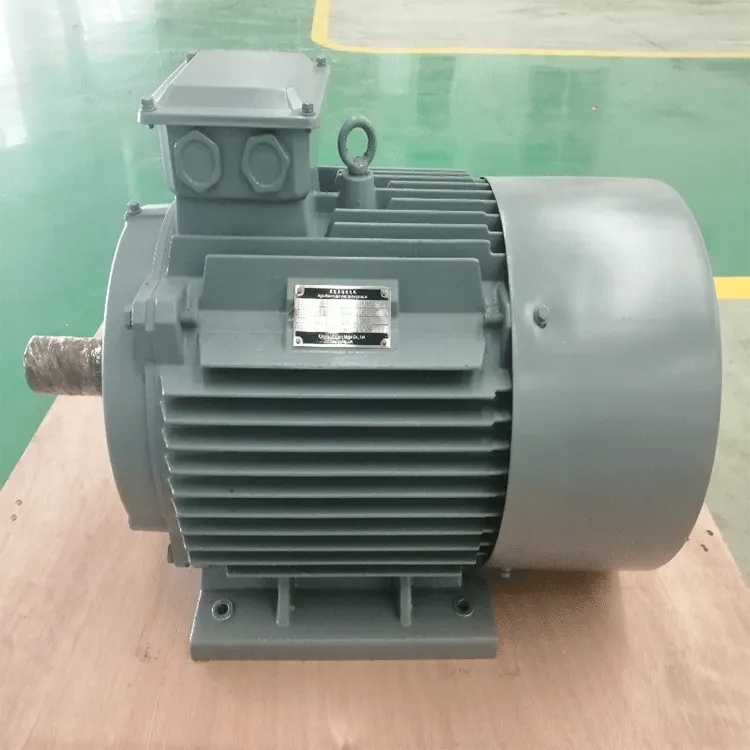
Motor efficiens IE4/IE5 removet maximam partem fixi magnetizationis damni per rotatores permanentis magnetis vel reluctantis, ita ut efficiens maneat alta dum onus cadit. Motor vulgaris perdit constantem portionem damni in currente idle, quae crescit procentualiter ad infimam productionem. Curva plana est ratio cur praemium classis redimitur ubi onera variant.
VFD non rigide requiritur, sed motor efficiens IE4/IE5 suum plenum potentiale attingit cum velocitas ad petitionem adaptatur. Sine motore motor adhuc superat unitatem IE2 ad punctum nominale, sed commodum partis oneris relinquitur. Utrumque coniungere ad IEC 61800-9-2 systematis conservationem capit quam tabella nominis indicat.
IEC 60034-30-1 classes IE definit per mensuras amissarum ad plures oneris puncta, itaque figura partis oneris probatur, non aestimatur. Motor efficiens IE4/IE5 in schedula suae notae classis habet quam fabrica inspicere potest. Data probationis independentis emptorem protegunt ab inscriptione quae bene videtur solummodo ad onus plenum.
Oversizing usually hurts. A motor sized above its real band runs in a low-efficiency corner, and an IE4/IE5 Efficiency Motor loses its advantage there. Right-sizing to the duty profile keeps the unit in its flat region, which is where the saving lives. Measure the load first, then choose the frame.
Loads that swing across the day and run long hours gain most, such as blowers, pumps, and compressors on variable demand. An IE4/IE5 Efficiency Motor holds efficiency through those swings, so the kWh drop shows on the monthly bill. Constant full-load duty sees less part-load benefit but still gains from the lower loss.
Payback follows the load factor and electricity tariff, often a few years where hours are high and the duty swings. An IE4/IE5 Efficiency Motor paired with a VFD shortens it further through system efficiency. The plant should rank candidates by measured saving per IEC 60034-30-1 rather than by class alone.


 EN