
 EN

In a pumping plant, an energy upgrade is often discussed as an efficiency project. That is only part of the electrical story. A Centrifugal Pump Motor IE5 can help improve the operating conditions that influence power factor, especially where a pump spends much of its time away from its design point. The important qualification is that a motor efficiency class does not guarantee a particular site power factor. A Centrifugal Pump Motor IE5 must be assessed with the pump curve, duty cycle, supply arrangement, and any variable-frequency drive (VFD).
As an engineer reviewing motor load curves, I start with the real hydraulic duty rather than the nameplate. A Centrifugal Pump Motor IE5 is most useful when its electromagnetic design, rating, and control strategy suit that duty. This article separates the mechanisms clearly, so a plant team can decide what to measure before expecting a power-factor benefit.
Efficiency and power factor are different measurements
Motor efficiency expresses how much electrical input becomes shaft output. Power factor describes how effectively the incoming current is converted into useful real power rather than circulating as reactive current. A Centrifugal Pump Motor IE5 may reduce losses, but it cannot eliminate the magnetizing current required by an AC motor. That distinction matters when an energy manager is tracking utility penalties, feeder capacity, transformer loading, or generator sizing.
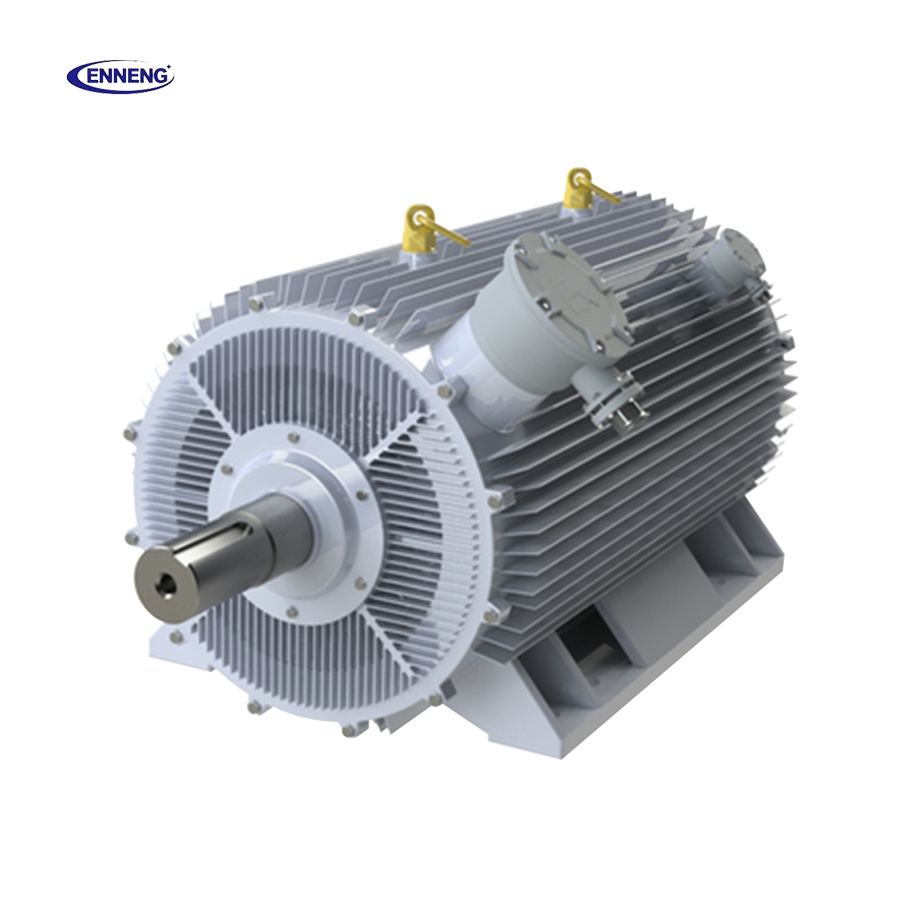
For a three-phase motor, real input power depends on voltage, current, and power factor. At light loading, the useful torque-producing current falls while magnetizing current remains comparatively significant. Therefore, the displacement power factor usually falls. Replacing a conventional unit with a Centrifugal Pump Motor IE5 can improve the overall operating picture, but the actual result should be verified at the motor terminals and at the VFD input when a drive is present.
Why the pump duty cycle changes the answer
Centrifugal pumps rarely operate at one fixed condition for their whole service life. Flow demand may vary by shift, season, tank level, valve position, or process recipe. If a pump is oversized and throttled, the motor may deliver only a modest fraction of rated shaft power. In that situation, even a well-designed Centrifugal Pump Motor IE5 can show lower power factor than it would near its intended loading range.
The shift that changes how teams specify a Centrifugal Pump Motor IE5 is realizing that peak efficiency only matters when the load profile reaches it. A motor selected close to the realistic absorbed-power range generally avoids the chronic underloading that increases reactive-current proportion. This is not an argument for undersizing: starting torque, peak flow, fluid density, temperature, and service factor still need engineering review.
How an IE5-oriented motor can support better electrical performance
IE classes provide an efficiency framework; IEC 60034-30-1 includes IE5 as an efficiency class for applicable line-operated AC motors, while variable-speed applications require system-level thinking as well. In a suitable application, a Centrifugal Pump Motor IE5 can support power-factor performance through several connected effects:
- Lower loss current: A Centrifugal Pump Motor IE5 is designed to reduce losses relative to lower-efficiency alternatives within its applicable category. Less loss for a given shaft duty can reduce the input burden, though it is not the same as a promised power-factor value.
- Better part-load fit when correctly selected: A properly rated Centrifugal Pump Motor IE5 can keep the motor closer to a productive operating region instead of leaving a much larger machine lightly loaded.
- Improved system decisions: Selecting a Centrifugal Pump Motor IE5 usually prompts a closer review of pump sizing, drive control, cable losses, and operating setpoints. Those system corrections often matter as much as the motor class.
- Lower thermal stress: Reduced losses may help thermal margin, but ventilation and temperature rise must still be checked at the actual speed and ambient condition.
An IE4/IE5 Efficiency Motor comparison should therefore include load curves, not just full-load catalogue figures. The question is not whether an IE4/IE5 Efficiency Motor has a better label; it is whether the selected machine and control method improve kW demand and current behavior across the hours that the pump actually runs.
Do not confuse motor-terminal power factor with VFD input power factor
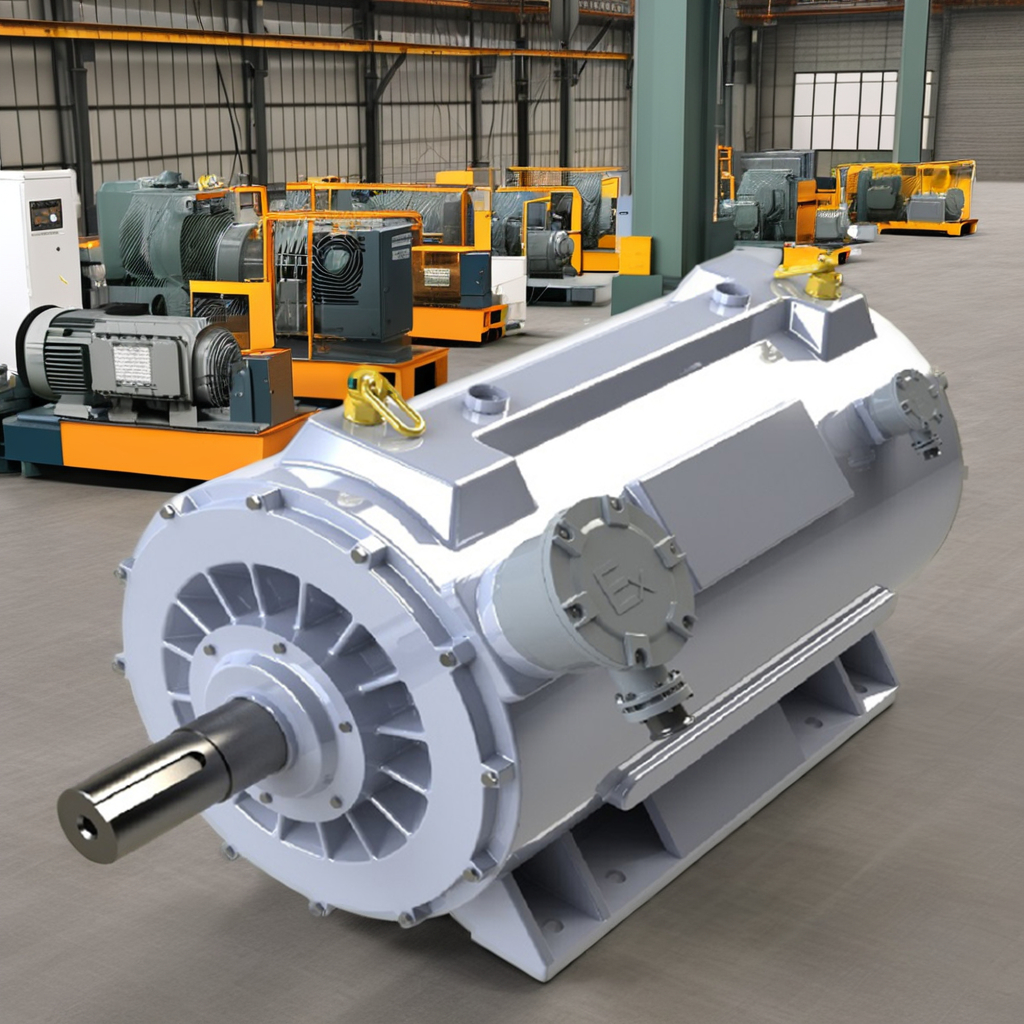
With direct-on-line operation, the measured motor-terminal power factor is central to the utility-side picture. With a VFD, there are two locations to examine. The motor side sees PWM voltage and a controlled frequency; the supply side sees the drive rectifier, DC link, harmonics, and any input reactor or active front end. A Centrifugal Pump Motor IE5 can be an appropriate part of a variable-speed upgrade, but it does not by itself determine the VFD input power factor or harmonic performance.
This is often misread as a motor-only issue, but it is a system issue. Measure kW, kVA, power factor, current, and harmonic distortion at the point relevant to the facility. Then compare a stable production period before and after the change. If the site uses capacitors, review their compatibility with drive harmonics before adjusting compensation equipment.
Where the expected benefit can disappoint
A Centrifugal Pump Motor IE5 will not correct a pump that is radically oversized, a poorly chosen impeller, an obstructed pipe, or a control loop that forces continuous recirculation. Nor should a buyer assume that high efficiency automatically produces high power factor at every load. If the ambient temperature is high, the motor runs at low speed, or fluid demand is highly intermittent, the selection and measurement plan need additional care.
Once you account for duty-cycle variation and field conditions, the nameplate comparison looks different from what you should plan for on site. That is why an IE4/IE5 Efficiency Motor decision should be reviewed by operations, maintenance, and electrical teams together.
Conclusion
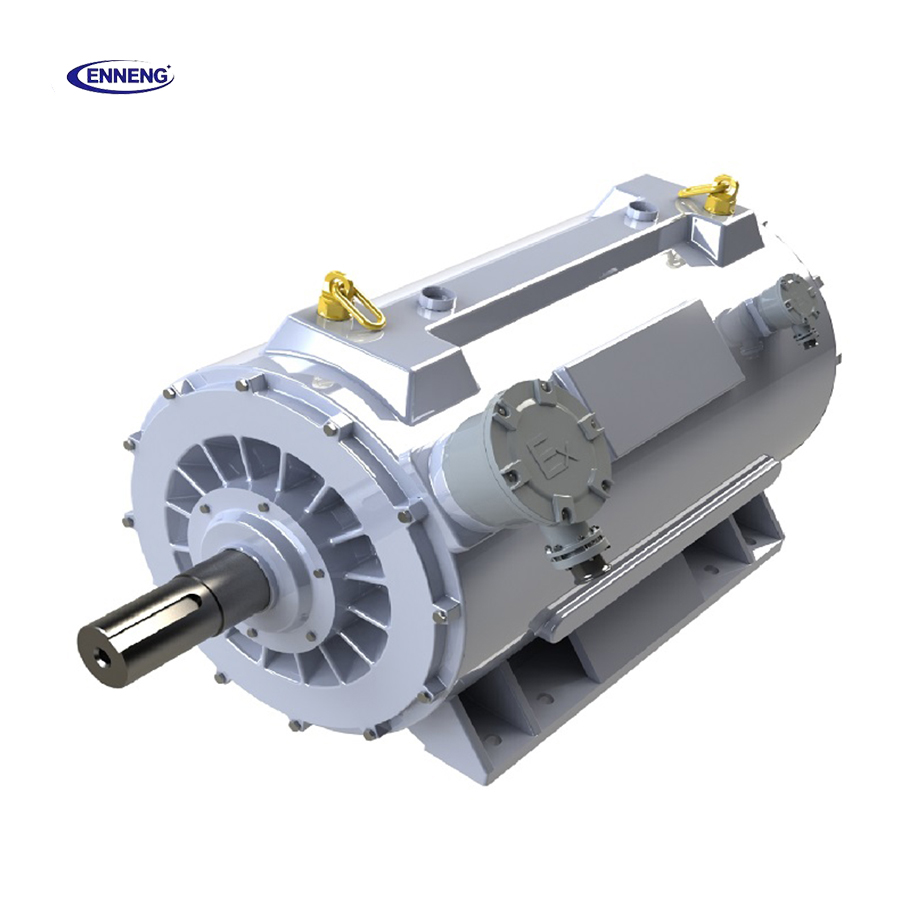
A Centrifugal Pump Motor IE5 can support stronger power-factor performance in fluid transportation systems when it is accurately sized and integrated with the pump and controls. Its main value is not a blanket power-factor promise. It is the opportunity to reduce losses, avoid persistent underloading, and build a more disciplined motor-pump-drive operating point. Start with measured duty data, select the Centrifugal Pump Motor IE5 for that reality, and verify the result at commissioning.
If you are evaluating commercial permanent magnet motors for sale and need an engineered drive solution that guarantees efficiency and longevity, ENNENG is your trusted partner.Contact ENNENG Today.Speak to our technical engineering team to receive a customised drive proposal.
- WhatsApp: +86 18562780228
- E-Mail: [email protected]
- Phone: +86 532 66000559