 EN

For an industrial circulating-water system, the cooling tower is not a background utility. Its fan train affects electrical consumption, water-side heat rejection, maintenance planning, and the consequence of an unexpected shutdown. Cooling Tower Direct Drive changes the question from “What does the replacement motor cost?” to “What does the entire fan drivetrain cost to operate over its service life?”
As an engineer reviewing permanent-magnet motor applications, I start with the duty cycle rather than the nameplate. A Direct Drive Motor can remove a gearbox, long shaft, couplings, and some associated bearings, but it only creates a convincing business case when its torque, fan curve, controls, structure, and maintenance plan suit the actual tower cell.
Why the conventional fan train carries hidden operating costs
A conventional induced-draft cooling tower often transfers motor speed through a coupling, shaft, and gearbox before the fan turns. Each item has a purpose, but each also adds a loss path, alignment requirement, inspection task, or failure mode. In a continuously operating water loop, these costs compound: a small transmission loss repeats every operating hour, while a gearbox inspection or oil-service event has labor, access, and safety implications.
The more useful comparison is therefore not motor efficiency in isolation. It is wire-to-air performance and lifecycle exposure. A cooling tower direct drive motor places high torque at low speed at the fan, simplifying the mechanical path. That can reduce frictional losses and routine drivetrain work; it does not mean every installed tower will deliver the same percentage saving.
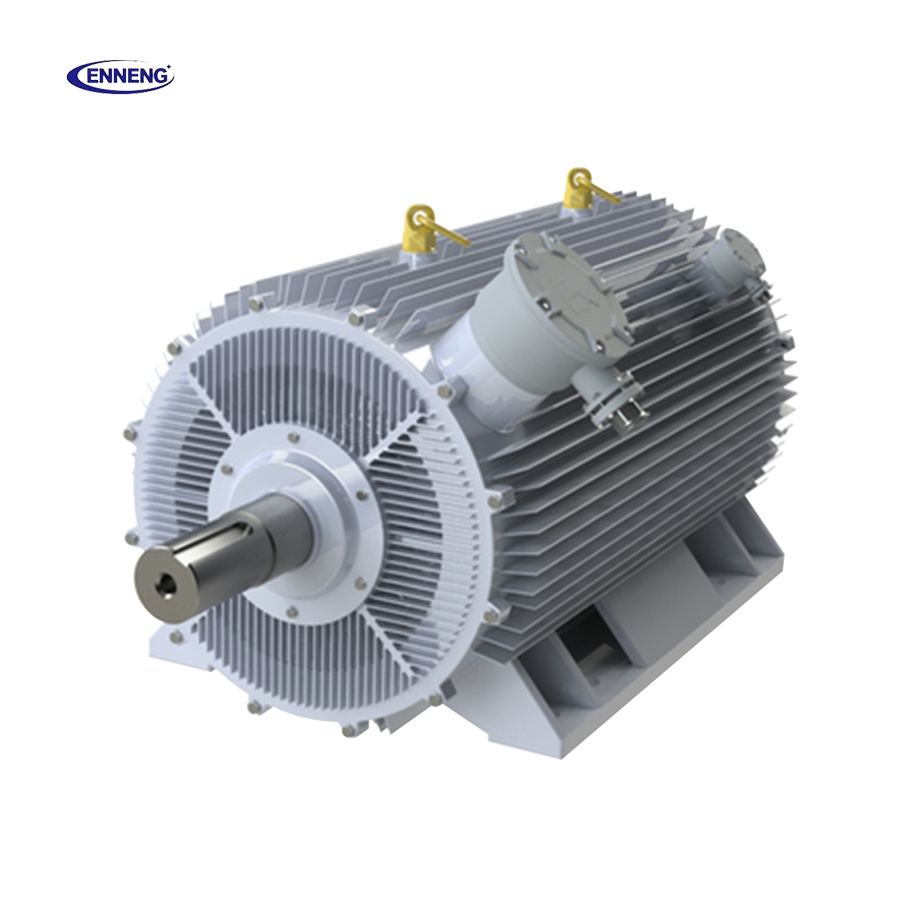
Where Cooling Tower Direct Drive affects the cost model
1. Energy cost: motor efficiency plus transmission losses
Energy is usually the largest recurring cost, especially where cells run for long seasons or around the clock. A direct arrangement eliminates gearbox and shaft losses, so the electrical input no longer has to pass through those components before reaching the fan. That is one source of savings. The other is speed control: with a variable-frequency drive, the fan can follow condenser-water temperature, wet-bulb conditions, and process demand instead of remaining at a fixed mechanical speed.
For a centrifugal fan with the same diameter, the fan affinity relationship expresses power as proportional to speed cubed. In practical terms, a modest speed reduction can have a disproportionately large effect on fan power. That relationship is a planning tool, not a promise: airflow resistance, cell condition, control logic, and required approach temperature still determine the actual operating point.
2. Maintenance cost: fewer components are not zero maintenance
Removing a gearbox can remove oil checks, oil changes, seals, gear wear, and many alignment tasks from the routine plan. Eliminating long shafts and flexible couplings can also reduce the number of elements that need periodic inspection. This is where a Direct Drive Motor may improve maintenance predictability, particularly on towers with difficult access or high labor cost.
Still, direct drive is not maintenance-free. The motor bearings, mounting hardware, fan assembly, electrical enclosure, vibration condition, and VFD all need a documented service strategy. A better lifecycle estimate replaces one checklist with another; it does not simply delete maintenance from the budget.
3. Reliability cost: prevent small faults from becoming production events
Industrial circulating-water systems can have limited thermal margin during peak demand. A gearbox or coupling issue may begin as noise, heat, or vibration and become a forced outage if it is missed. A Cooling Tower Direct Drive architecture reduces the number of mechanical interfaces that can require alignment or lubrication, which can simplify root-cause work and spare-parts planning.
Reliability gains must be evaluated at system level. Confirm fan inertia, starting and stopping ramps, structural stiffness, motor protection, drainage, cable routing, and the availability of drive support. If those details are ignored, savings in the mechanical train can be offset by avoidable electrical or commissioning problems.
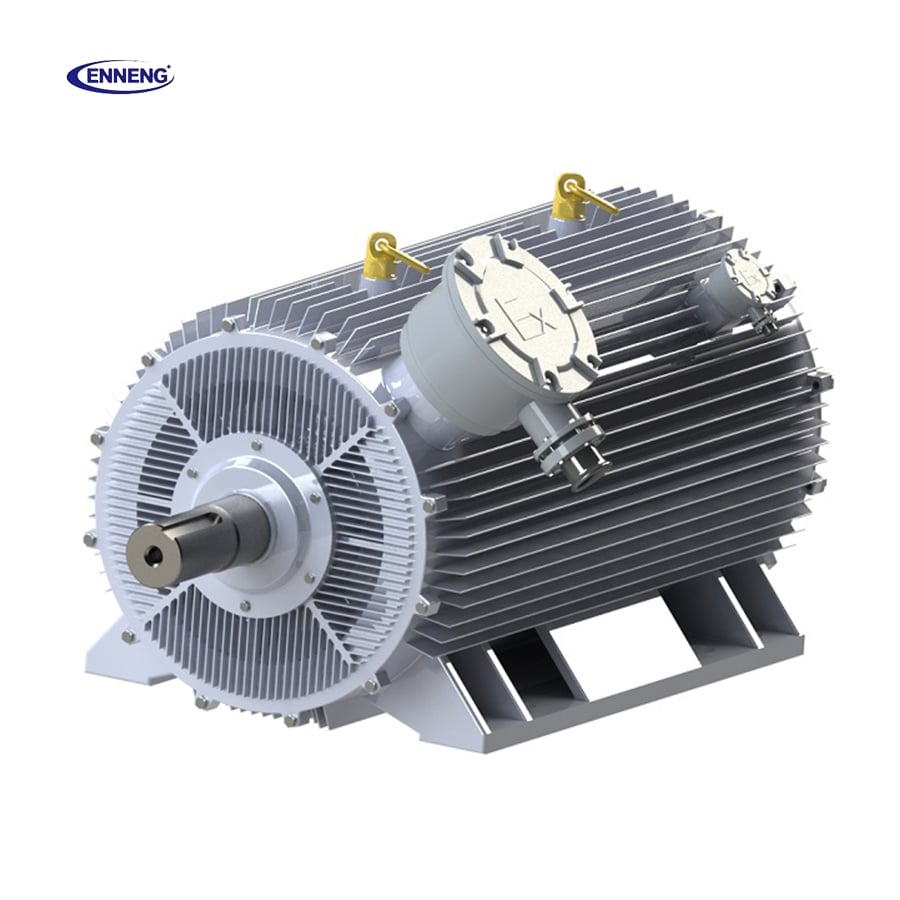
Use a total-cost calculation instead of a headline efficiency claim
Start with a baseline that the operations team recognizes. Collect at least one representative operating period for each tower cell: kW, fan speed, run hours, inlet and outlet water temperatures, ambient wet-bulb trend, maintenance labor, lubricant and spare-part use, and events that affected production or standby capacity. Then compare the direct-drive proposal against the same duty, not against an idealized full-load point.
|
Cost category |
What to compare |
Decision question |
|
Electricity |
Measured kW at comparable heat load and fan speed; annual operating hours; tariff |
Does part-load control reduce purchased energy without compromising approach temperature? |
|
Mechanical upkeep |
Gearbox oil, seals, couplings, alignment labor, shaft/bearing work, access time |
Which planned tasks disappear, and which motor/VFD tasks replace them? |
|
Downtime exposure |
Failure history, redundant-cell capacity, response time, lost-process consequences |
Will a simpler drivetrain reduce the risk of a capacity-limiting event? |
|
Retrofit and integration |
Mounting, fan adaptation, electrical work, controls, crane/access, commissioning |
Are one-time scope items included before calculating payback? |
A useful review also tests sensitivity. Change annual run hours, electricity price, expected maintenance avoidance, and required capital work. If the business case only works under an aggressive electricity price or a zero-downtime assumption, the project needs a more conservative plan.
Match the cooling tower direct drive motor to the real duty cycle
The shift that changes motor selection is moving from peak efficiency to duty-cycle fit. A motor can look excellent at rated load yet spend most of its life at lower fan demand. Conversely, a tower that genuinely stays near maximum thermal duty may benefit more from a drivetrain-loss comparison than from wide turndown claims.
- Establish fan torque and speed: use the fan manufacturer’s data and field measurements; do not infer suitability from kW alone.
- Review the VFD as part of the system: specify compatible voltage, control mode, protection, bypass strategy where appropriate, and acceleration/deceleration limits.
- Assess the environment: moisture, drift, corrosion, temperature, and washdown exposure should guide enclosure and coating selection.
- Check mechanical integration: direct mounting, fan balance, hub connection, guards, and tower structure deserve the same attention as motor efficiency.
- Plan verification: define acceptance measurements for kW, vibration, temperatures, water temperatures, and control stability before commissioning.
If the tower structure has unresolved vibration, severely degraded fill, or a control problem that is already forcing unnecessary fan speed, correct those constraints first. A direct-drive retrofit is strongest when it is part of a water-loop optimization plan, not a substitute for basic tower condition work.
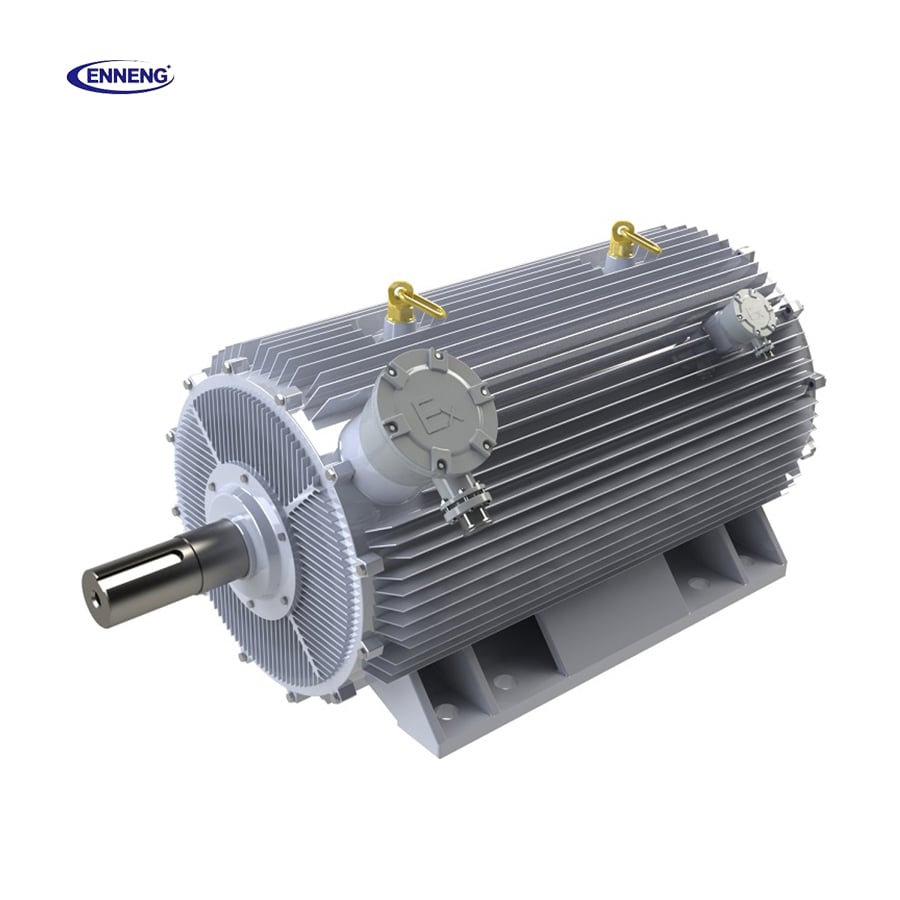
How to validate savings after commissioning
Set a measurement and verification window before the conversion. Trend comparable loads and weather conditions, then normalize results as far as practical for heat rejection demand. Track kWh per operating hour, fan speed, water temperatures, vibration, maintenance labor, and unplanned interventions. The aim is not to prove a predetermined result; it is to learn whether the cooling tower direct drive motor is delivering the predicted operating outcome on this site.
That record also improves future capital decisions. It tells the plant whether the next priority is another fan train, a control-sequence change, water treatment, heat-exchanger cleaning, or something else entirely.
When is Cooling Tower Direct Drive the right cost decision?
Cooling Tower Direct Drive is often worth detailed evaluation when a tower has high annual run hours, recurring gearbox or shaft maintenance, expensive access, a variable heat load, or meaningful downtime exposure. The case can be weaker for lightly used standby cells, systems with very short remaining life, or projects where structural and electrical integration costs are disproportionate to the expected benefit.
The practical conclusion is simple: compare the whole installed system, not a single efficiency number. A properly matched direct-drive package can lower energy and mechanical-maintenance exposure by simplifying the fan train and enabling better speed control. The final decision should rest on measured duty, a complete retrofit scope, and a verification plan that operations and finance can both audit.