 EN

For a Mining Industrial Motor installed in a deep well, heat is not a secondary maintenance concern. It is part of the operating limit. The motor may run for long intervals under heavy load, in a confined environment where ambient temperature, fluid movement, installation geometry, and control settings all influence how quickly internally generated heat can leave the machine. If that heat path is weak, a motor can look acceptable during commissioning yet lose insulation life, magnet performance margin, bearing reliability, or drive stability once it reaches true steady state.
As a technical sales consultant, I start a Mining Industrial Motor discussion with the duty cycle and cooling boundary, not the headline power rating. A nameplate tells you the rated point; it does not automatically prove that the installation can reject the heat produced at that point. That distinction matters especially in deep-well continuous heavy-duty operation, where there is little idle time for the machine to cool down.
Continuous duty turns a heat source into a heat balance
Every Mining Industrial Motor produces losses. Copper loss in the windings, iron loss in the magnetic circuit, mechanical loss in bearings and seals, and additional loss associated with harmonics or poor power quality all become heat. In a short intermittent cycle, some of that heat can be absorbed by the motor mass and released during rest. In continuous duty, the relevant question changes: can the complete system reach a safe thermal equilibrium?
That is why thermal dissipation design must be evaluated as a chain. Heat has to move from conductors and rotor components through insulation, impregnating material, laminations, frame interfaces, coolant or surrounding medium, and ultimately into the well environment. A strong Mining Industrial Motor design considers the resistance of every link. Improving one component while overlooking a bottleneck elsewhere can leave winding hot spots essentially unchanged.
There is a useful practical correction here. Higher insulation class is valuable, but it is not a substitute for a credible cooling path. Common insulation-class references identify different maximum temperature capabilities, yet the useful margin depends on actual ambient temperature, temperature rise, hot-spot behavior, and the tolerance allocated for the application. In other words, an insulation label is a thermal budget input, not a blanket approval for a hotter installation.
Why deep-well conditions make heat rejection harder
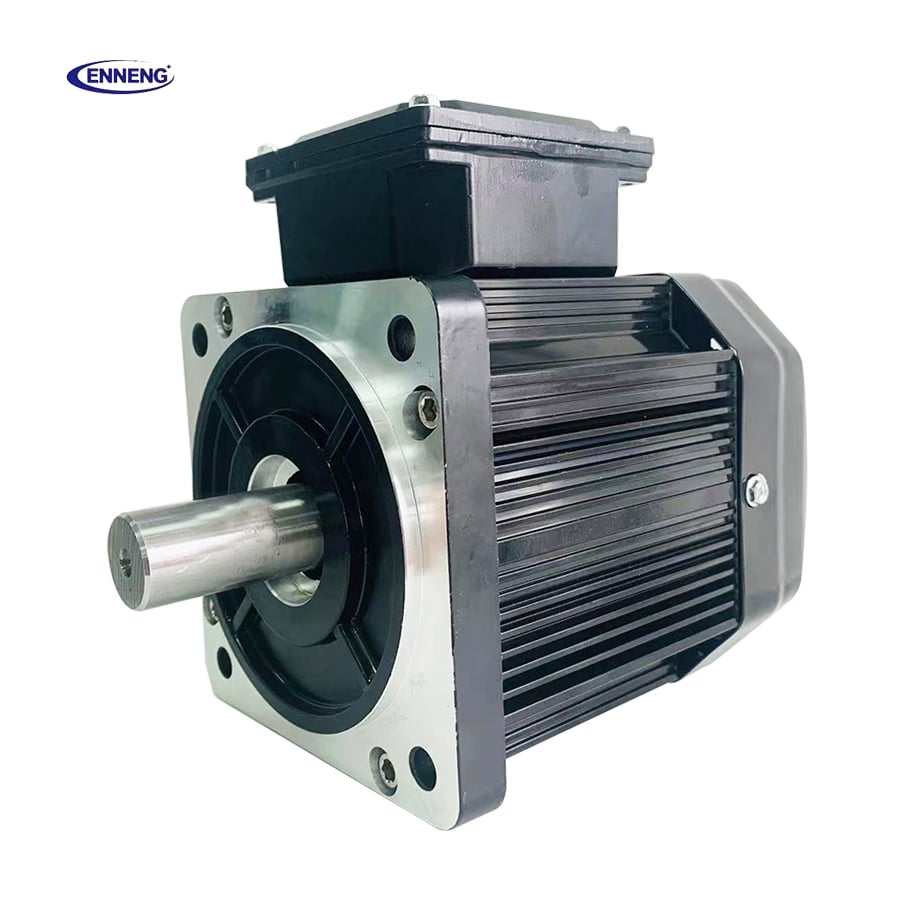
A deep-well Mining Industrial Motor often works under conditions that compress its thermal margin at the same time. The surrounding temperature may already be elevated, the installation can restrict airflow or fluid circulation, and access limitations make late-stage modifications expensive. Highly mechanized deep-mine environments can also carry significant sensible heat loads, so engineers should use site temperature data rather than assume a conventional 40°C ambient condition applies.
Cooling-medium behavior deserves the same attention as the motor itself. If the design depends on fluid flow past the housing, ask whether the real flow rate, viscosity, contamination level, and orientation will sustain that heat transfer. If it depends on an external fan, ask whether the fan can deliver its intended performance in the actual enclosure and dust environment. If the motor is submerged or jacket cooled, confirm the intended thermal contact and avoid assumptions about stagnant pockets around the housing.
For a Mining Industrial Motor, enclosure protection and thermal resistance can also pull in opposite directions. A more protected enclosure may be appropriate for dust, moisture, or contaminants, but it can alter the route by which heat exits. The right answer is not to choose the least protected enclosure for cooler running. It is to specify protection, sealing, frame surface, cooling method, and allowable temperature rise as one application package.
Permanent Magnet Motor PMSM: thermal limits are system limits
A Permanent Magnet Motor PMSM can offer useful efficiency and control advantages, particularly where speed or load changes over the operating profile. Still, a permanent-magnet design requires disciplined thermal verification. Magnet material, rotor construction, windings, bearings, and the inverter-driven control system each have temperature-sensitive limits. A Permanent Magnet Motor PMSM should therefore be assessed at the expected load spectrum, speed range, cooling condition, and supply quality rather than at a single ideal operating point.
Variable-frequency operation adds another reason to review the complete thermal picture. Low-speed operation may reduce self-ventilation on designs that depend on shaft-mounted fans, while inverter switching can add harmonic losses. That does not make a drive-fed Mining Industrial Motor unsuitable. It means the thermal study should state where the motor will run, how it will be cooled at those speeds, and what derating or independent ventilation is necessary.
Design choices that protect the thermal margin
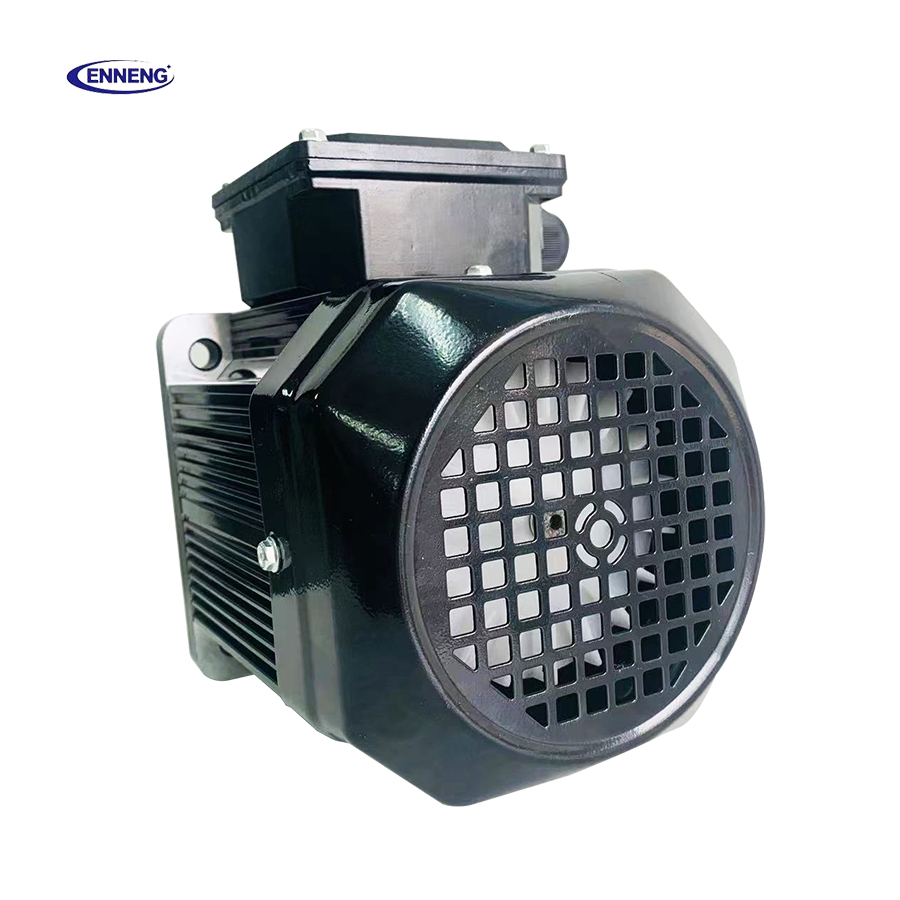
Thermal reliability begins before procurement and continues through commissioning. The following choices help convert a generic Mining Industrial Motor rating into a defensible deep-well solution:
- Define the real duty profile. Record torque, speed, starts, overload duration, supply conditions, and expected continuous-load periods. Peak power alone is not enough.
- Establish the site thermal boundary. Use measured or conservatively specified ambient and cooling-medium conditions, including seasonal and depth-related variation.
- Review the cooling path. Confirm frame geometry, jackets, external airflow or fluid flow, installation clearances, and any enclosed-space restrictions.
- Allocate temperature margin deliberately. Compare predicted temperature rise with insulation capability, bearing and lubricant limits, magnets where applicable, and sensor thresholds.
- Specify monitoring that supports action. Winding temperature sensors, bearing-temperature monitoring, and drive alarms should be tied to clear derating, alarm, and shutdown responses.
- Validate at steady state. A successful start-up test is not the same as a continuous-duty validation. Run long enough to observe stabilized temperatures under representative load.
What to ask before approving the motor
Before approving a Mining Industrial Motor, ask the supplier and project team to document the assumed ambient condition, cooling medium, mounting arrangement, duty profile, permitted temperature rise, insulation system, sensor locations, and drive compatibility. Then ask a more revealing question: if any one of those assumptions changes underground, which temperature becomes limiting first?
This question moves the conversation from a catalog comparison to a risk-managed specification. It also exposes where additional margin is needed. For example, a cooler winding design may not solve a bearing problem if lubricant temperature is the first constraint. Likewise, a larger frame is not automatically the answer if stagnant cooling flow is the true bottleneck.
The ENNENG Customisation Advantage
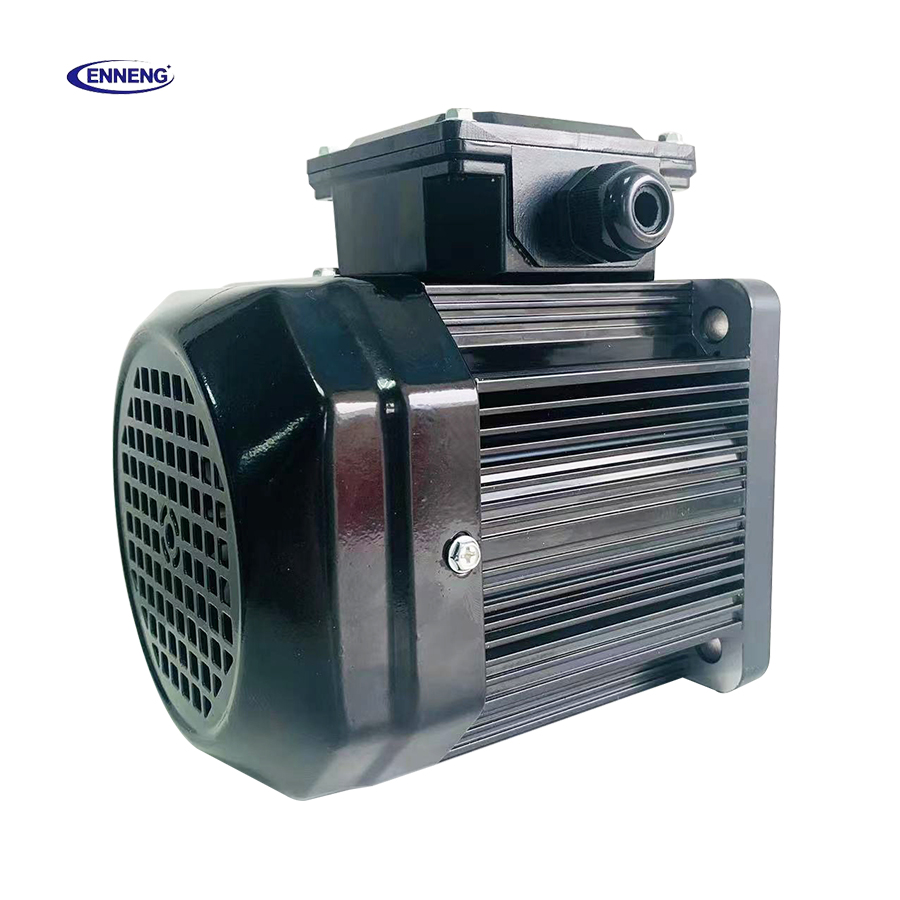
No two industrial facilities share the same spatial or mechanical constraints. ENNENG stands out because we do not just supply off-the-shelf catalogue products; we specialise in delivering a tailor-made permanent magnet motor tailored to your specific application .
Supported by our elite R&D team consisting of engineers from the National Rare Earth Permanent Magnet Engineering Centre, and backed by dozens of patents, we customise high-voltage (6kV/10kV) and low-voltage (380V/660V/1140V) solutions to match your existing footprint. From water treatment facilities and oil wells to explosion-proof mining environments, we deliver optimal performance where general-purpose motors fail .
If you are evaluating commercial permanent magnet motors for sale and need an engineered drive solution that guarantees efficiency and longevity, ENNENG is your trusted partner.Contact ENNENG Today.Speak to our technical engineering team to receive a customised drive proposal.
- WhatsApp: +86 18562780228
- E-Mail: [email protected]
- Phone: +86 532 66000559
Thermal design is a reliability decision, not an optional upgrade
The central reason thermal dissipation design is critical is simple: a Mining Industrial Motor in deep-well continuous heavy-duty service has limited opportunities to recover from accumulated heat. A suitable design is one whose heat-generation sources, heat-transfer path, protective enclosure, control method, and monitoring plan have been reviewed together against the actual site conditions.
There is no universal cooling solution. If the well environment, loading pattern, or control strategy differs from the original assumptions, reassess the thermal margin before the motor reaches a damaging steady state. That discipline gives a Mining Industrial Motor a better chance to deliver reliable continuous service—and gives the operations team clearer evidence for when to derate, investigate, or intervene.