
why-centrifugal-pump-motor-ie5-gains-wide-application-in-watersupply-and-wastewater-industries, why-centrifugal-pump-motor-ie5-gains-wide-application-in-watersupply-and-wastewater-industries, /blog
EN

2026/09/08
A municipal waterworks in southern China ran three 90 kW constant-speed pumps feeding a district network. The duty swung hard between night low demand and morning peak, yet the motors sat at fixed speed while throttling valves burned the surplus as heat and noise. A Centrifugal Pump Motor IE5 paired with a variable-frequency drive replaced the middle unit during a scheduled overhaul. Within the first quarter the plant logged a 31 percent drop in pumping electricity for that line, with no change to output or pressure setpoints.
The previous induction machine carried an IE2 label and lost roughly 8 percent of input energy as heat before the shaft ever turned a drop of water. At part load the loss grew worse because the motor could not shed its magnetizing current. Operators compensated with bypass valves, which turned useful pressure into turbulence inside the pipe. A Centrifugal Pump Motor IE5 removes that waste by holding high efficiency across the whole speed band.
After the swap, the drive trimmed speed to match flow instead of choking the line. The Centrifugal Pump Motor IE5 tracked the load without slip, so shaft power followed the pump curve instead of fighting it. Night mode ran at 55 percent speed and drew under a third of peak current. Maintenance noted cooler bearing temperatures and quieter operation, which eased the strain on the mechanical seal and cut unplanned stoppages.
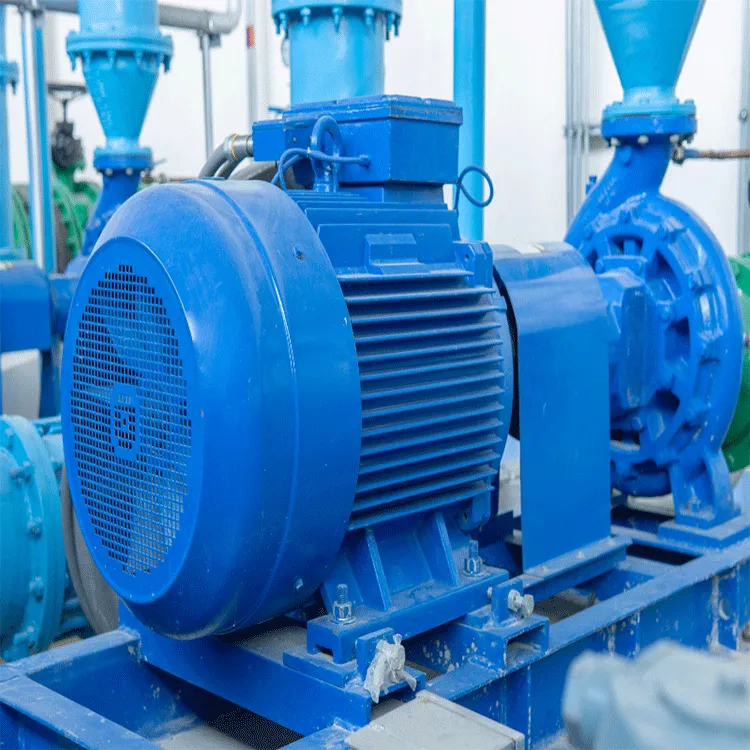
Most pumping energy never reaches the water. It leaks away in throttling, in fixed-speed mismatch, and in motor losses that grow as the duty moves off the nameplate point. Understanding those leaks explains why a Centrifugal Pump Motor IE5 pays back faster in water and wastewater than in steady manufacturing loads.
Pumping follows the affine law: halving flow needs roughly an eighth of the power only if speed follows. A fixed-speed motor cannot do that, so the extra energy escapes through the control valve as heat. A Centrifugal Pump Motor IE5 under drive control keeps efficiency above 90 percent even at 40 percent load, where an older unit might fall below 80. Over a year of variable demand that gap is the entire business case. A water utility that mapped its hourly demand before the upgrade found the synchronous motor paid back in nineteen months, while a neighbor that skipped the study waited twice as long to see the same result on paper.
Standard induction motors lose energy in rotor copper and slip, losses that rise with load swings. A synchronous permanent-magnet design carries no slip and uses rare-earth magnets instead of induced current, so its iron and windage losses stay small. The Centrifugal Pump Motor IE5 turns more of the watt-hour into pressure, and the saving shows up on the monthly utility bill rather than in a spec sheet footnote. A pump running twelve hours a day recovers the premium within two cooling seasons, after which every unit of saved energy is pure margin for the operator who owns the line.
The fit comes from physics and from the standards that define the class. Water and wastewater duty is rarely steady, so a motor graded only at full load tells half the story. A Centrifugal Pump Motor IE5 is measured across the band and certified to a global efficiency tier.
IEC 60034-30-1 sets the IE efficiency classes for low-voltage AC motors, with IE5 as the highest currently defined tier. A genuine Centrifugal Pump Motor IE5 must meet that loss level at the rated point and stay close across the operating range. Buyers should request the declared loss figures and the test standard, because a label alone proves nothing without the underlying measurement method behind it.
Synchronous operation means rotor speed locks to supply frequency through the drive, with zero slip loss. The Centrifugal Pump Motor IE5 therefore keeps its torque smooth and its current low even when the network pressure dips. That steadiness protects the coupling and the impeller from shock, which matters in wastewater where rags and grit already punish the mechanical train every shift.
Good results come from correct selection and disciplined care, not from the label alone. A Centrifugal Pump Motor IE5 still needs the right enclosure, the right drive, and a commissioning routine that confirms the pump and motor speak the same language.
Size the motor to the pump best-efficiency point plus a margin, not to the worst-case peak. Match the drive switching frequency to the winding to avoid bearing currents, and confirm the cooling fan covers low-speed operation. A Centrifugal Pump Motor IE5 from a supplier such as Enneng Motor typically ships with a recommended drive table, which removes guesswork during tendering and shortens the approval cycle.
On site, verify phase sequence, insulation resistance, and vibration before first run, then log the no-load current as a baseline. Check bearing temperature and seal leakage weekly for the first month. A Centrifugal Pump Motor IE5 asks for little beyond clean cooling air and torque checks on the coupling, but those simple acts protect the efficiency gain that justified the purchase in the first place.
A Centrifugal Pump Motor IE5 typically cuts motor losses by 15 to 30 percent versus an IE2 induction machine, and more when the duty is variable. A waterworks case showed a 31 percent drop in line electricity after one pump was converted to drive-controlled synchronous operation. Real saving depends on load profile, throttling practice, and how often the pump runs below half capacity across the day and season.
Yes, in almost every water or wastewater application the efficiency gain depends on speed control. A Centrifugal Pump Motor IE5 on fixed supply still runs, but the duty never follows the pump curve, so the saving vanishes into throttling loss. Specify a drive with the correct switching frequency and bearing-current protection, and confirm the motor and drive are listed as a matched pair before purchase.
IEC 60034-30-1 defines the IE efficiency classes for low-voltage AC motors, including the IE5 tier at the top of the scale. Ask the supplier for declared loss values and the test method, because the class only means something with measured data behind it. Regional rules such as the EU Ecodesign regulation reference these classes when setting minimum efficiency thresholds for pumped systems.
Wastewater rooms are wet, corrosive, and gritty, so an IP55 or higher enclosure with epoxy-coated frame is the safe baseline. A Centrifugal Pump Motor IE5 in a screened building still faces humidity and hydrogen sulfide, which attacks windings and terminals. Specify tropicalized insulation and a space heater for standby units, and confirm the protection rating matches the local atmosphere rather than a generic catalog value.
During the first month check bearing temperature, seal weep, and vibration weekly, then move to quarterly unless the duty is severe. A Centrifugal Pump Motor IE5 needs clean cooling air, torque-checked couplings, and insulation resistance tests at each shutdown. Wastewater grit shortens seal life faster than the motor, so track seal leakage as the leading indicator of upcoming maintenance.
Yes, provided the drive and braking are set for it, because synchronous machines handle frequent speed changes well. A Centrifugal Pump Motor IE5 in a tank-fill cycle sees many starts, so confirm the rotor and coupling are rated for the start count and that the drive limits inrush. Size the thermal path for the average, not the peak, and log start frequency to plan bearing service ahead of failure.


 EN