
why-ie4/ie5-efficiency-motor-shows-prominent-advantages-for-intermittent-heavyload-industrial-workflows, why-ie4/ie5-efficiency-motor-shows-prominent-advantages-for-intermittent-heavyload-industrial-workflows, /blog
EN

2026/09/20
Intermittent heavy-load equipment swings between near-idle and peak torque, which breaks the assumption behind a single rated-efficiency number. Crushers, presses, hoists, and mixers rarely hold the nameplate point for long, since the process repeats a ramp, hold, and release pattern. ENNENG answers this profile with an ENNENG Permanent Magnet Motor (PMSM) built to the IE4/IE5 Efficiency Motor class, because permanent-magnet construction keeps losses low across a wide band, not only at the design point on the frame.
A jaw crusher throttles between an empty run and a full bite, a hydraulic press dwells then stamps, and a batch mixer accelerates a heavy charge before slowing to a tumble, so each strands an induction drive in a weak part of its curve. An ENNENG IE4/IE5 Efficiency Motor holds useful efficiency through those partial-load spans.
Rated efficiency is measured at full load and nominal speed, yet an intermittent drive may run below half load for most of a shift. Specifying from the nameplate alone overstates the saving and hides the part-load gap that decides the bill, while oversizing adds iron and windage loss the light duty cannot use. ENNENG judges the IE4/IE5 Efficiency Motor against the recorded duty cycle, since the meter charges for energy across the whole swing.
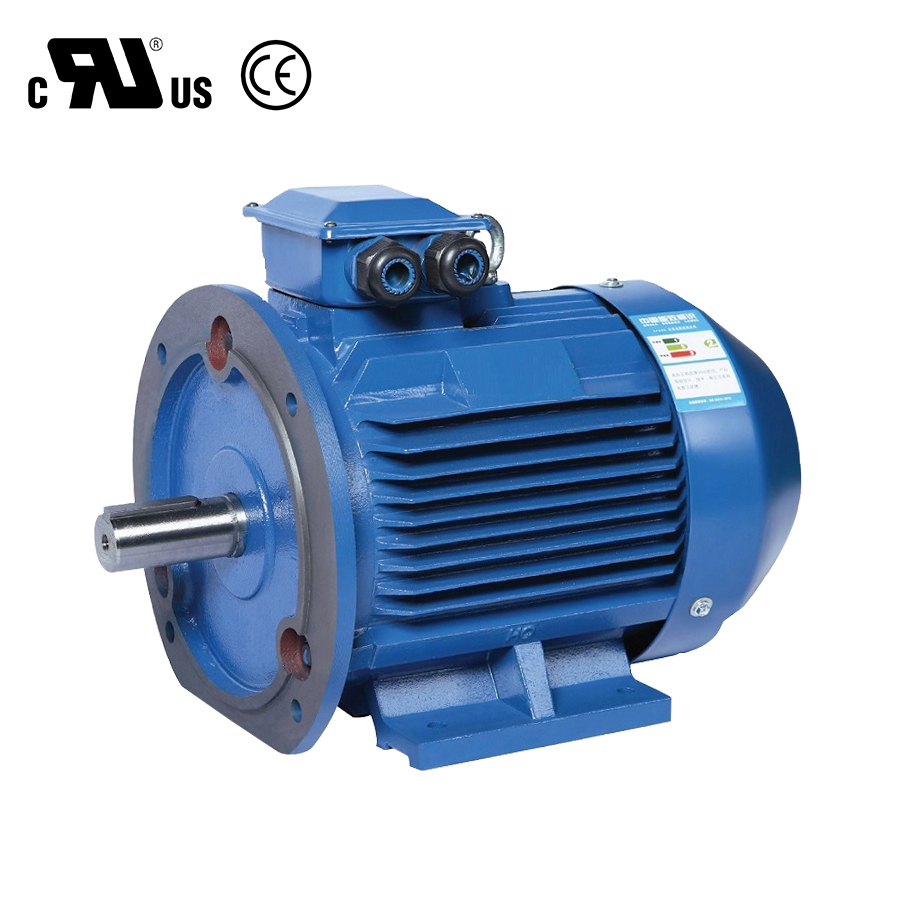
The IE4/IE5 Efficiency Motor shows its advantage when the load keeps changing. Higher part-load efficiency, quick torque response, and modest standby loss lower the daily energy draw more than the headline number suggests, because the magnet field removes the dominant rotor loss at part load and turns those traits into a steady benefit on every cycle.
Permanent-magnet rotors remove rotor copper loss, so efficiency stays high well below rated power. On an intermittent press, the long low-power dwell sits in an efficient band instead of a wasted one. The IE4/IE5 Efficiency Motor therefore recovers energy a conventional drive dissipates as heat during the quiet part of each stroke. Under IEC 60034-30-1 the difference is measurable:
|
Metric (IEC 60034-30-1 class) |
Inductio Motoris |
Motor Magnetis Permanentis (IE5) |
|
Perditio rotae ad onus partem |
Copper loss plus magnetizing current |
None; fixed permanent-magnet field |
|
efficientia ad onus quinquaginta percentuum |
Falls well below rated |
Stays close to rated |
|
Idle magnetization |
Continuous draw when stationary |
Near-zero standby loss |
|
Resultatum cyclicum |
Consumit energiam in tempore quietis |
Reddit eam ut pretium conservatum |
Quia machinae cyclicae in illo silentio spatio maxime temporis operis vivunt, praerogativa motoris efficiens IE4/IE5 in partibus oneris superat comparationes nominis in tabula nominis quae ad onus plenum referuntur.
Motor PMSM attingit torque imperatum celeriter, quia campus semper praesens est, breviando fenestram accelerationis gravis in singulis partibus. Perdita magnetizationis in statu expectationis parva manet, et motor efficiens IE4/IE5 lineam responsivam servat dum consumptus fundi per diem productionis minuitur.
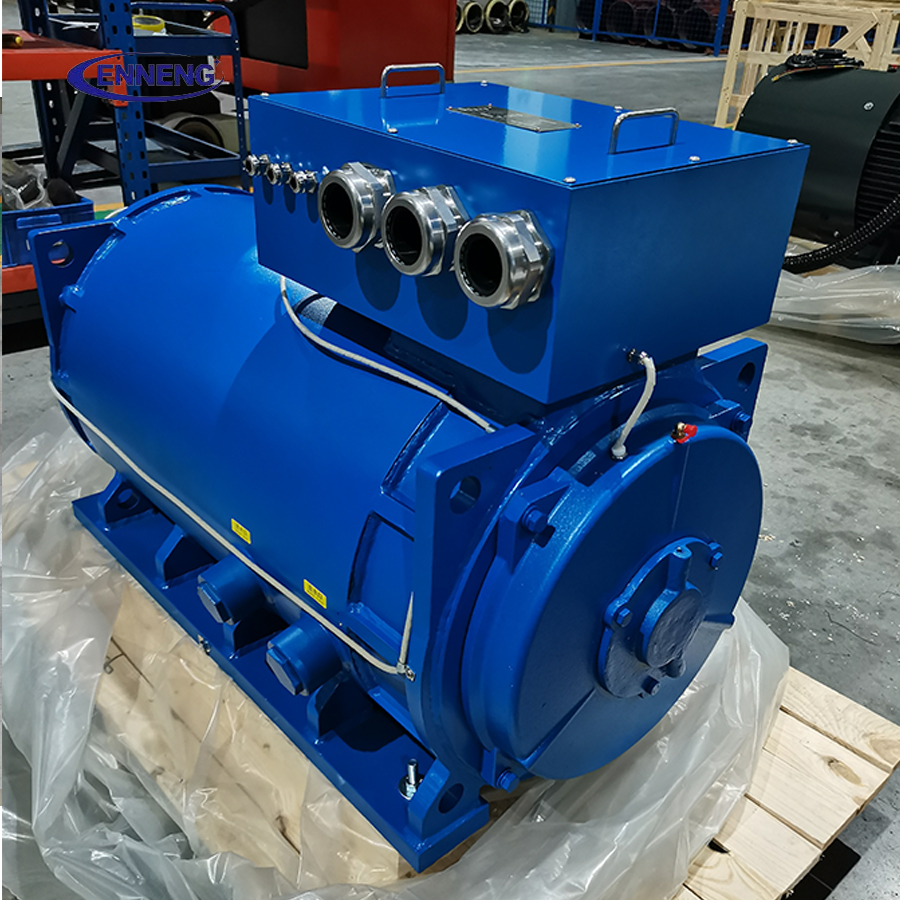
Praestatio documentata pattern magis convincit quam curva. ENNENG's Serie TYB Motor efficiens IE4/IE5 sustinet efficaciam IE5 usque ad 25 percentum oneris partialis et praebet augmentum efficaciae 5%-10% ad onus plenum contra machinam asynchronam IE3.
The IE4/IE5 Efficiency Motor suits this stop-start profile because the magnet field needs no build-up time, so torque arrives immediately at restart. ENNENG's TYT series was documented at Shandong Gold Group's flotation line, ball mill, and bulk material handling drives , running continuous duty at rated efficiency in the mid-90% range with a full-load temperature rise below 80 K — figures that hold across the cyclic mineral-processing load rather than only at a single rated point.
The saving comes mainly from the part-load and standby spans, not the brief peak. ENNENG documents 15%–30% comprehensive energy savings against conventional induction drives on variable-load duty, and up to 40% reduction in unplanned maintenance downtime, because the permanent-magnet rotor removes the dominant rotor copper loss across the whole cycle.
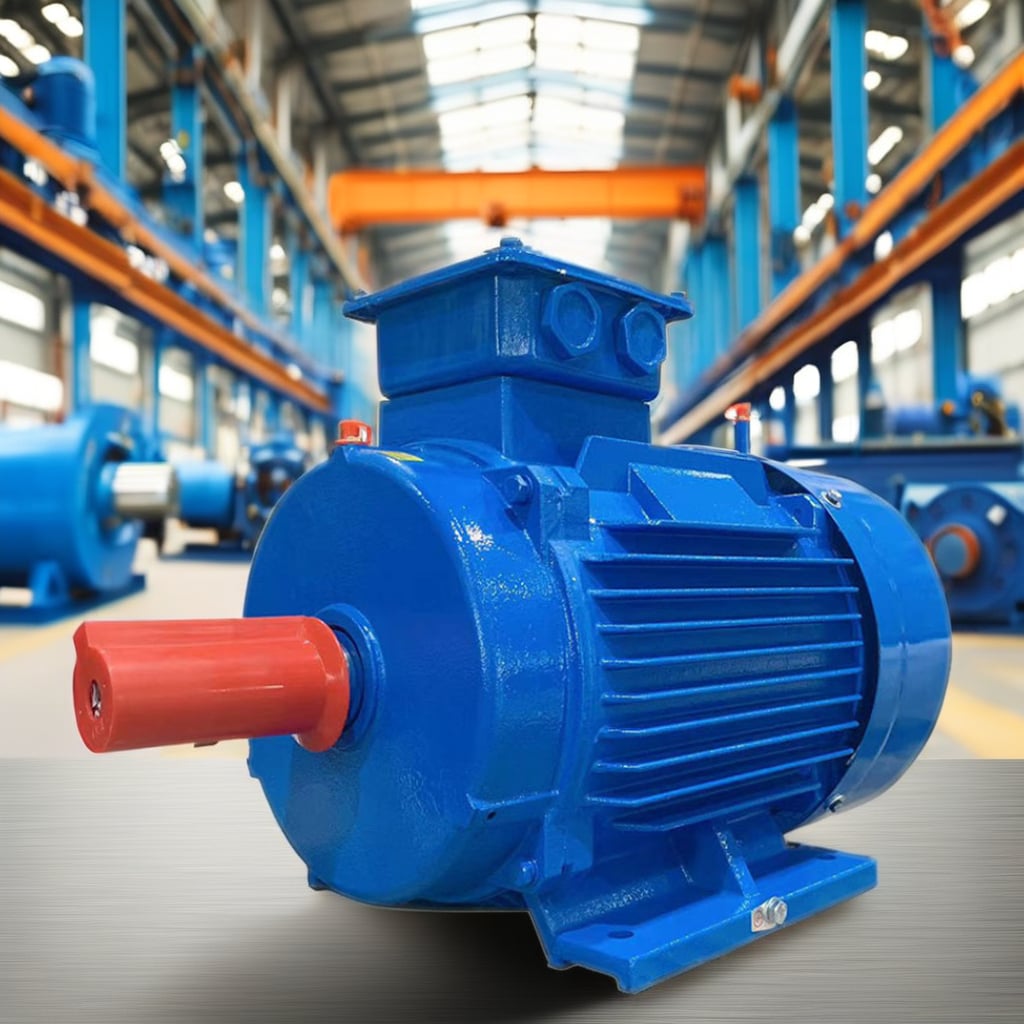
Selection for cyclic work differs from steady-duty selection, because the rating must serve the whole profile, not the peak. The IE4/IE5 Efficiency Motor should be matched to the measured profile, verified against standard tests, and serviced with the duty in mind, so the measurement step is never skipped.
Log current, speed, and torque for a representative week before choosing the rating, then size the frame to the peak with margin. Verify the unit against IEC 60034-30-1 and IEC 60034-1, and confirm it communicates with the existing controller. The IE4/IE5 Efficiency Motor should be accepted only after a witnessed load test, and ENNENG supports this step with referenced test reports and IE4/IE5 PMSM units .
Commission with the actual batch sequence, watch winding temperature and vibration during the first shifts, and keep airflow clear. Inspect bearings and the cooling path on a run-hour schedule, and re-measure after thirty days. The IE4/IE5 Efficiency Motor retains its advantage only when duty, control, and upkeep stay aligned.
Intermittent heavy-load drives should be specified from a logged duty cycle, not a nameplate. ENNENG supplies ENNENG Permanent Magnet Motor (PMSM) built to IE4/IE5 under ISO 9001 and CE for plants in more than 20 countries.
Send ENNENG the one-week current, speed, and torque log from the target drive, and the engineering team returns a duty-matched IE class recommendation with a payback estimate before purchase.
A:An IE4/IE5 Efficiency Motor suits cyclic heavy load because the permanent-magnet rotor keeps losses low across a wide power band, not only at the rated point. Crushers, presses, and mixers spend most of a shift below peak, so part-load efficiency decides the daily draw. Fast torque response and small standby loss add further reduction during the idle spans between cycles, which is where conventional drives tend to waste the most energy.
A:On a cyclic machine the long partial-load spans dominate the energy bill, so high part-load efficiency matters more than a strong full-load number. An IE4/IE5 Efficiency Motor removes rotor copper loss and stays efficient during the slow tumble or dwell. The saving therefore comes from the quiet part of each stroke, where an induction drive often loses efficiency and dissipates power as heat instead of delivering useful mechanical work.
A:IEC 60034-30-1 defines the IE efficiency classes and the test method used to confirm a claimed rating, while IEC 60034-1 covers general performance and acceptance. ISO 50001 provides the energy-management framework that makes the measurement repeatable. A plant should ask for a test report referenced to these standards so the IE4/IE5 Efficiency Motor claim is verified rather than simply asserted by the supplier.
A:Log current, speed, and torque for a full production week on the candidate drive, then map the result to its duty cycle and load percentage. This reveals the real partial-load and idle spans that a nameplate hides. Only after that record should a rating be chosen, because the IE4/IE5 Efficiency Motor pays back where run hours and cycle shape justify the change, not where the frame looks largest.
A:Commission with the actual batch sequence and watch winding temperature and vibration during the first shifts. Keep the enclosure airflow clear, inspect bearings and the cooling path on a run-hour schedule, and re-measure consumption after thirty days. The IE4/IE5 Efficiency Motor keeps its advantage only when control settings and upkeep stay matched to the duty, which protects the original energy saving across the service life.
A:Yes. Where a site recovers energy or runs on-site generation, the same logic applies to rotating machines. Vertical-axis wind turbine generators in the 1kW to 10kW range, with 3kW, 5kW, and 10kW as common models, and generators from 5kW to 5MW at 110V to 690V, benefit from the same duty-matched selection used for the IE4/IE5 Efficiency Motor.


 EN